
Does your shop or garage need more than one welder?
You need a MIG welder for thin sheets, but do you also need a tig welder for the stainless steel? And it would be neat to also have a Stick welder for outside’s dirty work…
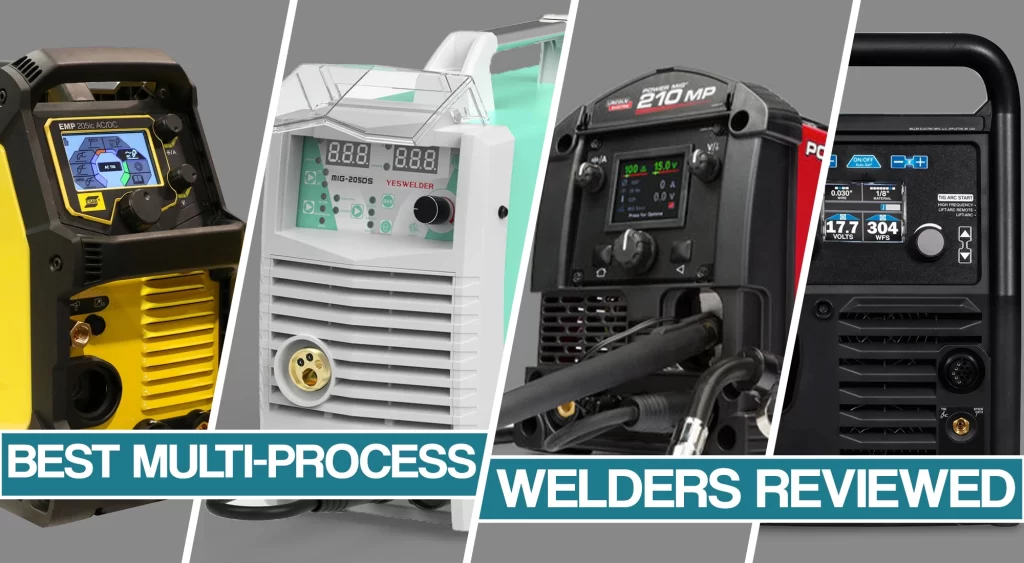
You can buy separate welding machines, but to save space and maybe money, the best choice would be one of those multi-process welders. Now multi-process welders are all expensive (more or less), but Not all of them are bang for your buck.
So to not throw your (probably hard-earned money) take a look at these reviews of the best multi-process welders and specifications carefully and choose a welder that will suit your needs.
Best Multi-Process Welders Quick Comparison
| Image | Name | Voltage | Current | Amperage | Duty Cycle | Process | Check Price |
|---|---|---|---|---|---|---|---|
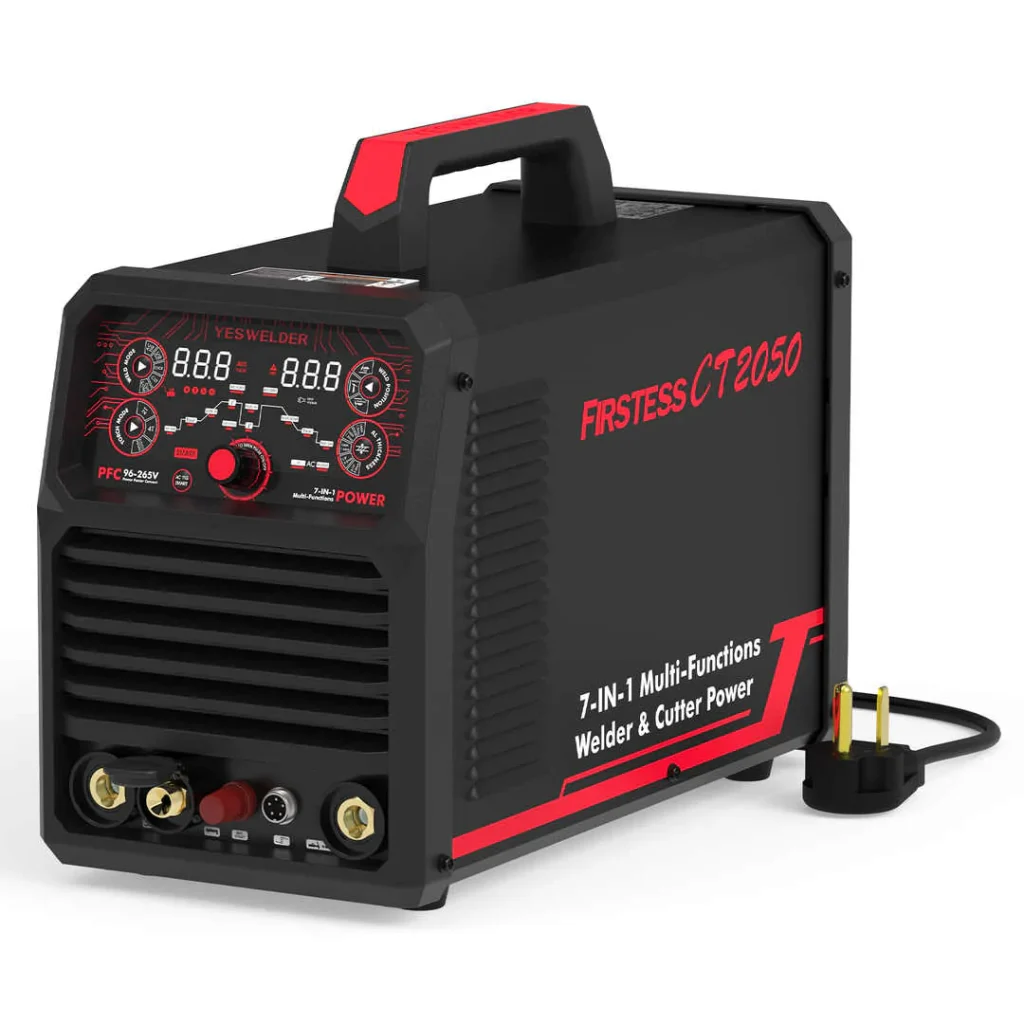 | YesWelder CT2050 7-in-1 Welder & CutterGet 10% Off With Coupon: -10% WELDPROS | 96-265V | AC/DC | TIG 5-200A Stick 10-200A Cut 12-45A | TIG 100% @ 200A Stick 100% @ 160A Cut 100% @ 45A | AC/DC TIG Pulse TIG Stick Plasma Cut | Check Price |
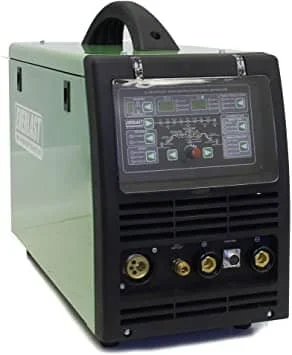 | Everlast THUNDER 255 MIG/TIG/Stick | 240V | DC | 30-275A | 60% @ 200A | MIG/Pulse MIG TIG/Stick Flux Core | Check Price |
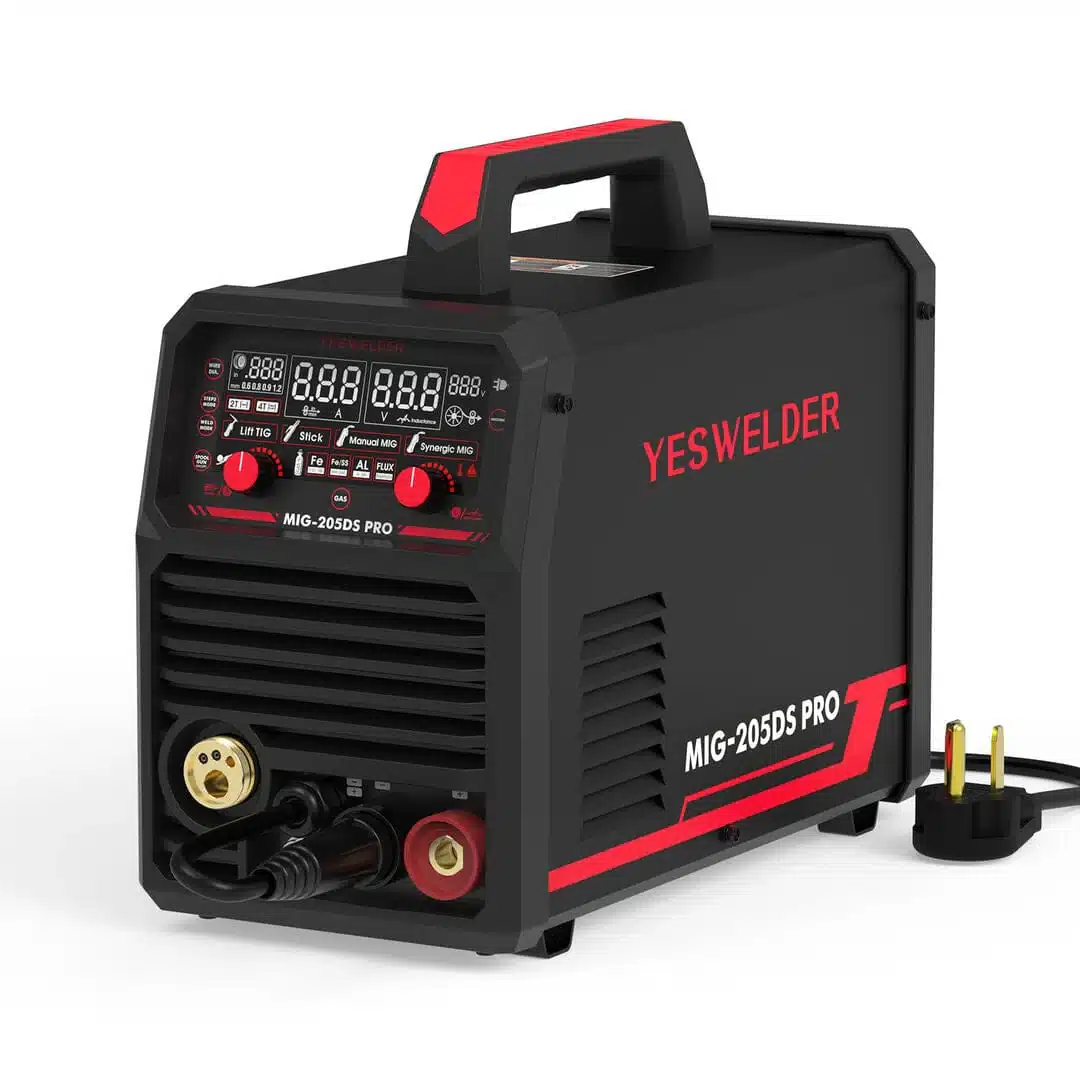 | YesWelder MIG-205DS-ProGet 10% Off With Coupon: -10% WELDPROS | 110/220V | DC | MIG 30-205A TIG 15-205A Stick 20-205A | MIG 60% @ 205A 100% @ 158A | MIG/Flux Core Lift TIG Stick Spool Gun | Check Price |
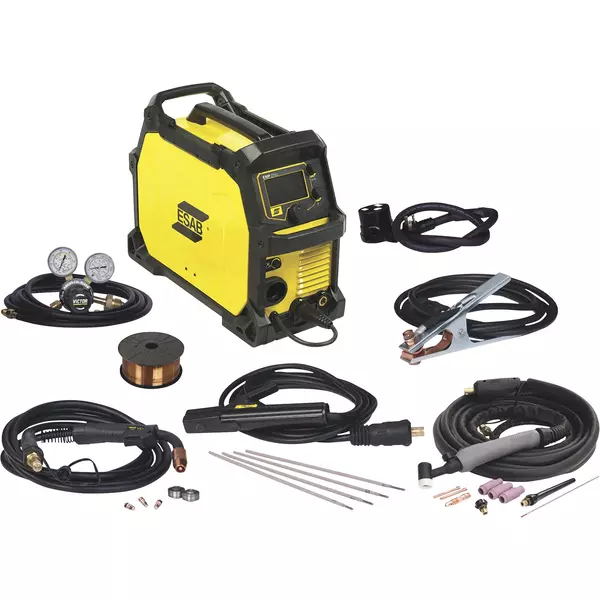 | ESAB Rebel EMP 215ic AC/DC | 120/230V | AC/DC | 15-235A | 25% @ 235A 100% @ 120A | MIG/Flux Core AC/DC TIG Stick Pulse TIG | Check Price |
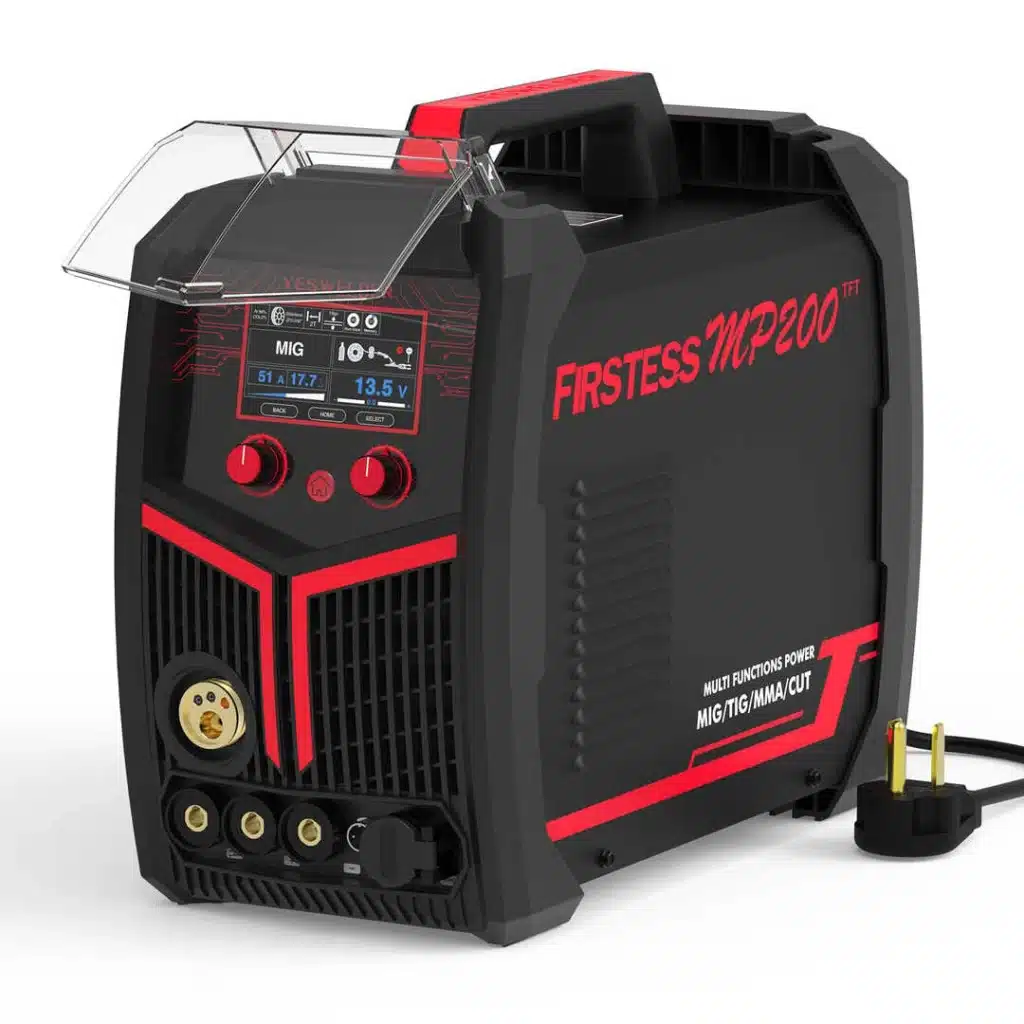 | YesWelder MP200-PRO 5-in-1 Welder & CutterGet 10% Off With Coupon: -10% WELDPROS | 120/240V | DC | MIG 30-200A TIG 10-200A Stick 10-180A Cut 15-40A | 60% @ 130A 100% @ 100A | Pulse MIG HF TIG/Pulse TIG Stick Plasma Cut | Check Price |
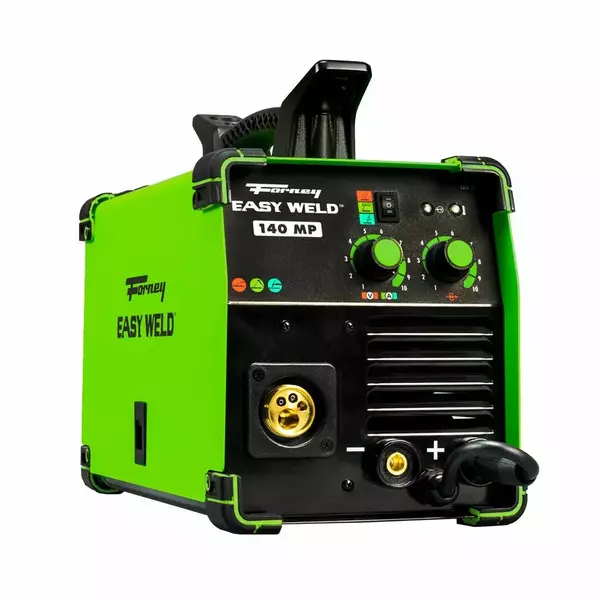 | Forney Easy Weld 140 MP | 120V | DC | 30-140A | 30% @ 90A | MIG/Flux Core TIG Stick | Check Price |
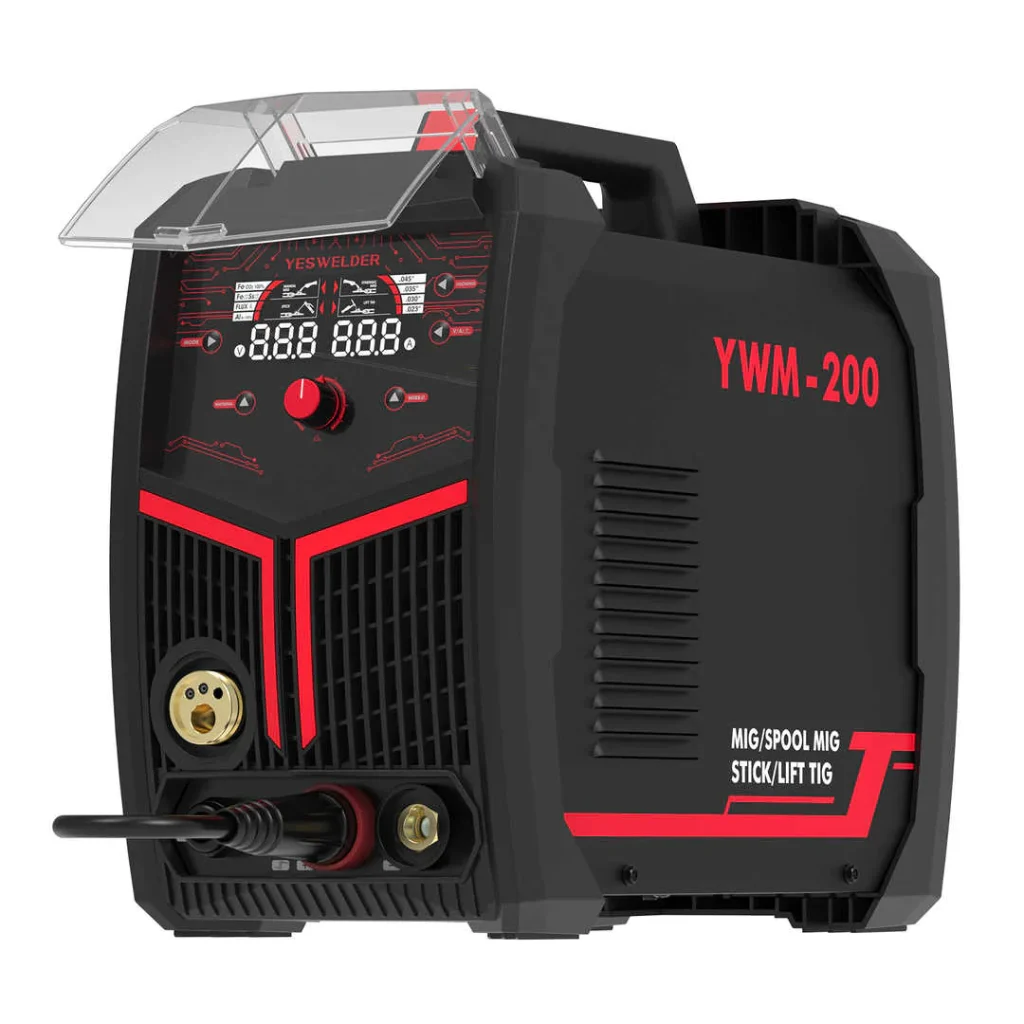 | YesWelder YWM-200 4-in-1 MIG WelderGet 10% Off With Coupon: -10% WELDPROS | 110/220V | DC | MIG 30-200A Stick 20-200A TIG 10-180A | 60% @ 200A | MIG/Flux Core Lift TIG Stick Aluminum MIG | Check Price |

| Miller Multimatic 220 AC/DC | 120/240V | AC/DC | MIG 30-230A TIG 10-210A Stick 20-210A | MIG 40% @ 200A 100% @ 130A | MIG/Flux Core AC/DC TIG Stick | Check Price |
The Best Multi-Process Welders – Reviews
- The YesWelder MIG-205DS, Dual Voltage, MIG/LiftTIG/ARC 3 in 1
- The Everlast PowerMTS 251Si Pulse Multi-Process Welder
- The Lincoln Electric POWER-MIG 210 MP Multi-Process Welder
- YesWelder 270Amp Wide Voltage Multi-process Welder
- The Miller Electric Multimatic 220 Multi-Process Welder
- The ESAB EMP2151C Multi-Process Welder
- The Lotos LTPDC2000D Non-Touch Pilot Multi-Process Welder
- The Forney MIG/Stick/TIG 3-in-1 190 Amp Multi Process Welder
- The Weldpro 200 Amp Inverter
- YesWelder FIRSTESS™ MP200 5-in-1 Welder & Cutter
1. YesWelder FIRSTESS CT2050 – Best Multi-Process Welder And Cutter For Money
Best Multi-Process Welder And Cutter For Money
Get 10% Off With Coupon: “-10% WELDPROS”
YesWelder FIRSTESS CT2050
The CT2050 is YesWelder throwing everything they know into one box. Seven processes. AC and DC TIG. A plasma cutter that chews through inch-thick steel. At under two grand, it’s a demolition tool for the argument that you need separate machines for each job.
| Processes: | MIG, TIG (AC/DC), Stick, Flux Core, Plasma | Input Voltage: | Dual 110V/220V w/ PFC |
| TIG Amperage: | 5-200A (220V) | Plasma Cut: | Up to 1-3/16″ |
| Stick Amperage: | 20-200A | Duty Cycle: | 60% at 200A |
| Technology: | IGBT Inverter w/ PFC | Weight: | 57 lbs |
| AC TIG: | Intelligent AC Control | Warranty: | 1-Year |
The AC TIG side is what separates this from every other budget multi-process machine. Aluminum welding on a sub-$2,000 unit that also does MIG and stick is rare. The intelligent AC control takes your material thickness and joint type and dials in the settings. Is it as refined as a dedicated $3,000 AC/DC TIG machine? No. Will it weld aluminum better than not welding aluminum at all? By a mile.
On the plasma side, the blowback start means no high-frequency interference with nearby electronics. You get clean cuts up to 1-3/16 inch. That’s enough for most fabrication work. The torch feels solid. The arc transfers fast. It’s not a Hypertherm, but it’s not pretending to be.
The PFC technology is quietly the best thing here. It accepts anything from 96V to 265V without a switch. Generator power, sketchy garage wiring, long extension cords — it compensates. I ran it off a 110V outlet and still got usable TIG output, which most dual-voltage machines can’t claim.
The WP-26 TIG torch is the obvious compromise. It’s bulky. Your hand gets tired faster than with a smaller torch. The remote amperage control is on the torch body, not a foot pedal, which takes adjustment. You can swap it for a WP-17 or WP-20, but that’s another hundred bucks you should budget for.
For a home shop or small fabrication business, this machine replaces three or four separate units. The math works: a decent AC/DC TIG alone costs more than this entire 7-in-1 box. If your work involves aluminum, steel, stainless, and occasional cutting, there’s nothing at this price that competes.
Pros
- 7 processes in one machine — MIG, AC/DC TIG, Stick, Flux Core, Plasma
- PFC handles 96-265V input without a voltage switch
- AC TIG welds aluminum at a price point where most machines are DC-only
- Intelligent AC control simplifies aluminum settings for beginners
- Plasma cuts up to 1-3/16 inch with blowback start
- Runs 6010 electrodes without complaint despite IGBT inverter
- Includes everything except a spool gun for aluminum MIG
- Significantly cheaper than buying separate AC TIG + plasma + MIG machines
Cons
- WP-26 TIG torch is oversized and fatiguing for long sessions
- At 57 lbs, it’s not portable — this is a cart machine
- No foot pedal included — you’ll want to add one
2. Everlast PowerMTS 251Si – Best Overall Multi-Process Welder
Best Overall Multi-Process Welder
Everlast PowerMTS 251Si
The Everlast PowerMTS 251Si is the fourth generation of a machine that figured out what most multi-process welders get wrong. Instead of bolting on features nobody asked for, Everlast focused on making the three core processes — MIG, DC TIG, and stick — actually work well. At 250 amps on 220V, it has more headroom than anything else in this price range.
| Processes: | MIG, TIG (DC), Stick | Input Voltage: | Dual 110V/220V |
| Max Amperage: | 250A (220V) | Duty Cycle: | 60% at 250A |
| TIG Start: | HF Start + Lift Arc | Stick: | Hot Start + Arc Force |
| MIG Control: | Synergic + Manual | Weight: | 65 lbs |
| Included: | MIG Gun, TIG Torch, Pedal | Warranty: | 5-Year |
The stick welding performance is the surprise. Most inverter machines struggle with 6010 rods, but the 251Si runs them clean. The hot start feature gives you an adjustable burst on arc initiation, and the arc force keeps the puddle stable when you push the rod in tight. I burned through a 5-pound box of 7018 without a single stuck rod. That’s rare on a multi-process unit.
MIG is where most people will live. The synergic controls are straightforward — set wire diameter, material thickness, and the machine picks voltage and wire speed. You can override manually if you know what you’re doing. The drive rolls feed consistently, and the torch feels balanced. It ships with everything for MIG: gun, regulator, hose, contact tips.
The TIG limitation is real: DC only. No aluminum. If that’s a dealbreaker, skip to the CT2050 or ESAB. But for steel and stainless TIG, the HF start is smooth and the arc is stable down to about 15 amps. Having both HF start and lift arc as options is unusual at this price — most machines make you pick one.
What puts the 251Si ahead of competitors is the warranty and what’s in the box. Five years. Not one year, not three years — five. And unlike most multi-process units that ship bare, this comes with the MIG gun, TIG torch, stick holder, regulator, and a foot pedal. You can weld the day it arrives without ordering anything extra.
For a professional shop that needs MIG and stick most days with occasional DC TIG work, this is the machine to beat. The 250-amp ceiling means you’re not outgrowing it in a year. At around $1,600, it splits the difference between hobbyist machines and the $3,000+ Miller/Lincoln tier. If you don’t need aluminum TIG, stop scrolling.
Pros
- 250 amps on 220V with 60% duty cycle — real shop-level output
- Runs 6010 and 7018 rods cleanly with adjustable hot start
- 5-year warranty is industry-leading for a multi-process machine
- Ships complete: MIG gun, TIG torch, stick holder, regulator, foot pedal
- HF TIG start plus lift arc option at this price point
- Synergic MIG makes setup fast for beginners, manual override for pros
- Fourth-generation refinements — they’ve worked out the early bugs
- Solid wire drive mechanism handles all wire types without slipping
Cons
- DC TIG only — cannot weld aluminum in TIG mode
- Weighs 65 lbs; not something you throw in the truck
- No AC TIG means you need a second machine for aluminum work
Pros & Cons Summarized
Pros
- Great value for the money spent
- Multi-process capability
- Great MIG and Stick features and functions
- High duty cycle
- Lightweight but sturdy and well constructed
- Great for hobby, DIY, home projects, and repairs
- 2-year warranty and protection features
Cons
- TIG torch not included
- Cannot TIG weld aluminum
- Spool gun for MIG aluminum is separately sold
3. YesWelder MIG-205DS-Pro – Best Multi-Process Welder For The Money
Best Multi-Process Welder For The Money
Get 10% Off With Coupon: “-10% WELDPROS”
YesWelder MIG-205DS-Pro
The MIG-205DS-Pro is YesWelder’s answer to anyone who wants a real multi-process machine without spending a fortune. At around $460, you get MIG, flux core, DC lift TIG, and stick in a package that weighs 25 pounds. That’s less than half the cost of the Everlast and a quarter of the Miller. The question isn’t whether it’s as good — it’s whether it’s good enough. For most people, it is.
| Processes: | MIG, Flux Core, Lift TIG, Stick | Input Voltage: | Dual 110V/220V |
| Max Amperage: | 205A (220V) | Duty Cycle: | 60% at 205A |
| MIG Control: | Synergic + Manual | TIG Mode: | DC Lift TIG |
| Spool Gun: | Compatible (Optional) | Weight: | 25.4 lbs |
| Wire Drive: | All-Metal Feed Rolls | Warranty: | 1-Year |
The synergic MIG controls are what make this machine accessible. Pick your wire diameter and material thickness, and the machine handles voltage and wire speed. You can override manually when you know what you want, but the default settings are close enough that beginners won’t chase their tail. The drive rolls are solid metal, not the plastic gears you find on cheap machines. That matters more than people realize.
The aluminum MIG capability is the unexpected bonus. With the optional spool gun, you can run aluminum wire through this thing. Most budget multi-process machines don’t even offer spool gun compatibility. Is it a dedicated aluminum MIG setup? No — but it works. I ran 4043 wire on 1/8 inch plate and got acceptable beads after dialing in the settings.
The lift TIG is basic. No HF start, no pulse, no AC. Scratch the tungsten, lift, and weld. It’s fine for steel up to about 1/4 inch. The arc is stable once it’s going. If TIG is your primary process, this isn’t your machine — but as a secondary process for when MIG is too crude and stick is too messy, it earns its keep.
At 25 pounds, this is a grab-and-go machine. Dual voltage means it runs off a 110V outlet for light work or 220V when you need all 205 amps. The 110V performance is surprisingly usable — 140 amps max, enough for 1/8 inch steel with flux core. I’ve taken it to jobsites where the only power was a fifteen-amp outlet and gotten real work done.
For the money, there’s nothing that matches the capability-to-cost ratio. A hobby welder who wants to do MIG most of the time but needs stick for outdoor work and the occasional TIG touch-up will use every process this machine offers. The one-year warranty is the downside, but at this price, you can buy two and still spend less than the Everlast.
Pros
- Four processes for under $500 — unmatched value
- Synergic MIG gets beginners welding within minutes
- Spool gun compatible for aluminum MIG — rare at this price
- Weighs only 25 lbs — genuinely portable
- Metal drive rolls instead of plastic on a budget machine
- Dual voltage works well on both 110V and 220V
- Compact footprint fits on a small cart or shelf
- Solid MIG arc quality with minimal spatter on synergic settings
Cons
- Lift TIG only — no HF start, no AC, no pulse
- One-year warranty is short compared to Everlast’s five
- No TIG torch or spool gun included — separate purchases
4. ESAB Rebel EMP 215ic – Editor’s Choice
Editor’s Choice
ESAB Rebel EMP 215ic
The ESAB Rebel EMP 215ic is what you buy when you’re done with compromises. AC and DC TIG. MIG with adaptive arc control. Stick with hot start and arc force. It’s the most technically capable machine on this list, and it’s priced accordingly at just under $3,000.
| Processes: | MIG, TIG (AC/DC), Stick | Input Voltage: | Dual 110V/220V |
| Max Amperage: | 215A (220V) | Duty Cycle: | 25% at 215A |
| TIG Control: | Balance, Frequency, Pulse | MIG Mode: | sMIG Adaptive Arc |
| Stick: | Hot Start + Arc Force | Weight: | 44 lbs |
| TIG Start: | HF Start | Warranty: | 3-Year |
The sMIG feature is what makes the Rebel different from every other machine here. Instead of synergic settings that follow a lookup table, sMIG watches the arc in real time and adjusts voltage and wire speed to match your technique. Push the gun faster, it compensates. Pull farther back, it compensates. The result is consistently clean beads even when your hand speed wanders. It’s not a gimmick — it works.
The AC TIG on this machine is legitimately good. Full balance, frequency, and pulse control. The HF start is crisp. You can dial in the cleaning action on aluminum or crank the penetration on thick sections. At 215 amps on 220V, it has enough power for 1/4 inch aluminum plate. The foot pedal response is linear and predictable.
Stick welding gets the same attention as the other processes. Adjustable hot start lets you set the arc initiation burst, and the arc force control is genuinely useful when you’re welding out of position or burning 6010 rods. The digital display shows actual amperage while you weld, not just the set point. Small thing, but it builds trust in what the machine is doing.
The trade-off is the duty cycle. At full 215 amps, you get 25% — two and a half minutes of welding, seven and a half of cooling. For production work, that’s a real limitation. The Miller Multimatic 220 has the same problem. These are premium machines with hobbyist duty cycles, which is frustrating at this price.
Customer service is the wildcard. ESAB’s reputation for support is uneven. Some owners report quick warranty resolutions. Others describe phone tag and delays. When the machine works — and most do — it’s the best multi-process welder you can buy under three grand. When it doesn’t, you might miss having a local repair shop.
Pros
- sMIG adaptive arc control actually works — not a marketing bullet point
- Full AC/DC TIG with balance, frequency, and pulse adjustment
- Crisp HF TIG start with no contamination issues
- Stick mode includes adjustable hot start and arc force
- Digital amperage display shows real-time output while welding
- Weighs 44 lbs — manageable for a machine with AC TIG capability
- Dual voltage runs on 110V at reduced output or full 220V power
- Build quality is a step above budget machines — tight tolerances throughout
Cons
- 25% duty cycle at full power limits production use
- ESAB customer support is inconsistent depending on your region
- Price pushes $3,000 — nearly double the Everlast
5. YesWelder FIRSTESS MP200 – Best 5-in-1 Multi-Process With Plasma
Best 5-in-1 Multi-Process With Plasma
Get 10% Off With Coupon: “-10% WELDPROS”
YesWelder FIRSTESS MP200
The YesWelder MP200 is the only machine on this list that cuts as well as welds. Five processes — MIG, flux core, stick, lift TIG, and a built-in plasma cutter. At under $700, it’s the cheapest way to get plasma cutting without buying a separate machine. For a home shop with limited space and budget, that changes the equation entirely.
| Processes: | MIG, Flux Core, Lift TIG, Stick, Plasma | Input Voltage: | Dual 110V/220V |
| Max Amperage: | 200A (220V) | Plasma Cut: | Up to 1/2″ |
| Duty Cycle: | 30% at 200A | TIG Mode: | DC Lift TIG |
| Wire Drive: | All-Metal Feed | Weight: | 48.5 lbs |
| Plasma Start: | Blowback (No HF) | Warranty: | 1-Year |
The plasma cutter is the headline, and it’s better than you’d expect. Half-inch clean cuts on steel. The blowback start means no high-frequency interference, so you can run it near your computer or phone without issues. On 220V, the arc is stable and the cut speed is respectable. On 110V, plasma output drops noticeably — you’ll get through 1/4 inch but it takes patience.
MIG and stick welding performance is solid. The arc on MIG is smooth, though it can run a bit cold on the 110V setting until you get your travel speed dialed in. The lift TIG is basic — scratch start, no pulse, no AC. Good enough for steel touch-ups and thin material. The wire drive is all metal and feeds consistently with both solid and flux core wire.
Build quality is where the MP200 surprises people. The case is sturdy, the controls have a satisfying click, and the overall feel is closer to a Miller than a Harbor Freight special. YesWelder designs and manufactures their own stuff, cutting out the middleman markup. The result is a machine that feels like it should cost twice as much.
The limitation is that this is a hobbyist machine, and it knows it. You’re not doing production aluminum welding. The duty cycle at 200 amps is around 30%. For a weekend fabricator, artist, or DIY enthusiast, that’s plenty. For a shop running eight-hour days, you’ll outgrow it within a year.
If you have a one-car garage and need to weld and cut in the same footprint, the MP200 solves a real problem. There’s no other machine at this price that does all five processes. The closest competitor would be buying a separate welder and plasma cutter, which costs more and takes up twice the space. For what it is, it’s hard to beat.
Pros
- Built-in plasma cutter at a price where competitors don’t offer it
- Five processes in one box — MIG, Flux Core, Stick, Lift TIG, Plasma
- Blowback plasma start avoids HF interference with electronics
- All-metal wire drive mechanism handles multiple wire types
- Build quality feels premium despite the budget price
- Dual voltage runs on 110V or 220V without a switch
- Compact for a 5-in-1 machine — fits on a standard welding cart
- YesWelder direct-to-consumer pricing cuts out distributor markup
Cons
- Plasma cutting power drops significantly on 110V input
- Lift TIG only — no HF start, no AC for aluminum TIG
- 30% duty cycle at max output limits heavy production use
6. Forney Easy Weld 140 MP – Best Budget Multi-Process Welder
Best Budget Multi-Process Welder
Forney Easy Weld 140 MP
The Forney Easy Weld 140 MP is the budget entry that doesn’t feel like a toy. At under $400, you get MIG, flux core, stick, and DC lift TIG in a 25-pound box that runs on standard 110V wall power. It’s not competing with the ESAB or the Everlast. It’s competing with the idea that you can’t weld at home without a 220V outlet and a thousand-dollar machine.
| Processes: | MIG, Flux Core, Lift TIG, Stick | Input Voltage: | 110V Only |
| Max Amperage: | 140A | Duty Cycle: | 30% at 140A |
| Material Thickness: | Up to 1/4″ MIG / 1/2″ FC | TIG Mode: | DC Lift TIG (Torch Separate) |
| Technology: | IGBT Inverter | Weight: | 25 lbs |
| Build: | All-Metal Case | Warranty: | 1-Year |
The 140-amp ceiling on 110V is the reality check. You can weld up to 1/4 inch mild steel with MIG and up to 1/2 inch with gasless flux core wire. That covers exhaust work, brackets, gates, trailer repairs, and most things a homeowner or hobbyist actually needs to weld. If you’re building a roll cage or welding 3/8 inch plate all day, this isn’t your machine.
The TIG capability is there but you have to buy the torch separately. Forney doesn’t ship a TIG setup in the box. The process is DC lift TIG only — scratch the electrode, lift, and go. It works for steel up to about 1/8 inch. The arc stability is adequate. Call it a bonus feature rather than a selling point.
The inverter technology is what makes this possible at 25 pounds. Old transformer machines at this price weighed 60-plus pounds and pulled twice the power for the same output. The inverter arc is smoother, the machine runs cooler, and it doesn’t trip your breaker when you strike an arc. The all-metal case adds durability that the plastic-shell competitors at this price don’t have.
Forney has been around since the 1930s making welding equipment, and the support network reflects that. Replacement parts are available. If something breaks after the warranty, you can fix it instead of throwing it away. The user reviews are overwhelmingly positive, especially from beginners who got acceptable welds on their first try.
This is a starter machine, and it’s priced like one. It won’t grow with you if you’re aiming for professional-level work, but for learning, home repairs, and light fabrication, it’s the cheapest legitimate multi-process option. A hundred bucks more gets you the MIG-205DS-Pro with dual voltage and more power, so if your budget stretches, skip to that.
Pros
- Under $400 for a real multi-process machine — lowest entry point
- Inverter technology at 25 lbs — lighter and more efficient than transformer
- Runs on standard 110V — no special outlet required
- All-metal case instead of plastic — survives shop drops
- Forney’s century-old company with actual replacement parts availability
- Handles flux core up to 1/2 inch and MIG up to 1/4 inch on 110V
- Overwhelmingly positive beginner reviews — approachable for first-timers
- Compact enough to store on a shelf when not in use
Cons
- 110V only — no 220V option limits output to 140 amps
- TIG torch and accessories sold separately
- 140-amp ceiling limits material thickness to 1/4 inch with MIG
7. YesWelder YWM-200 – Best 4-in-1 Aluminum MIG Welder
Best 4-in-1 Aluminum MIG Welder
Get 10% Off With Coupon: “-10% WELDPROS”
YesWelder YWM-200
The YesWelder YWM-200 is built around a specific capability that most budget multi-process machines skip: aluminum MIG. With an optional spool gun, you can run aluminum wire through this 4-in-1 machine that also handles steel MIG, flux core, stick, and DC lift TIG. At around $500, the spool gun compatibility alone makes it worth a look if aluminum is on your project list.
| Processes: | MIG (Alum), Flux Core, Lift TIG, Stick | Input Voltage: | Dual 110V/220V |
| Max Amperage: | 200A (220V) | Duty Cycle: | 60% at 200A |
| MIG Control: | Synergic + Manual | TIG Mode: | DC Lift TIG |
| Spool Gun: | Compatible (Optional) | Weight: | 33 lbs |
| Wire Drive: | All-Metal Feed Rolls | Warranty: | 1-Year |
The wire drive system is the foundation. All-metal feed rolls, adjustable tension, and a motor that doesn’t bog down when the spool resists. It runs solid wire, flux core, and aluminum wire — the latter being the test that separates real wire drives from the plastic-gear units that slip as soon as the wire gets soft. The drive handled .035 aluminum wire without birdnesting once I got the tension set.
Stick welding is solid here. The YWM-200 runs 6011 and 7018 rods cleanly with a stable arc even at lower amperage. The hot start feature makes arc striking easier on the first try. Note that it’s DC only, so you’re limited to DCEP electrodes. For most general stick welding, that covers the majority of rods you’ll actually use.
The lift TIG is the weak point — DC only, scratch start, no pulse. It’s functional for steel but not a reason to buy this machine. If TIG is fifty percent or more of your work, look at the CT2050 or the ESAB. Think of the TIG mode here as a cleanup tool: thin sheet metal, precise bracketry, tack welds that MIG would overrun.
The dual voltage setup works on 110V for light duty and 220V when you need the full 200 amps. The 110V performance is respectable — enough for auto body work and thin material repairs. At 220V, the 60% duty cycle at 200 amps puts it ahead of the ESAB Rebel for sustained output, which is unexpected at a quarter of the price.
The trade-off is that the spool gun and TIG torch are separate purchases. You’re buying capability potential, not capability out of the box. The machine ships ready for MIG, flux core, and stick. Budget an extra $150-200 for the spool gun if you want aluminum MIG. The competitive comparison at this total price still favors the YWM-200, but go in knowing what’s included.
Pros
- Aluminum MIG capable with spool gun — rare at the $500 price point
- All-metal wire drive handles aluminum, flux core, and solid wire
- 60% duty cycle at 200 amps on 220V — higher than the ESAB Rebel
- Dual voltage with solid 110V performance for light work
- Stick mode runs 6011 and 7018 smoothly with hot start
- Synergic MIG controls simplify settings for beginners
- Weighs 33 lbs — portable enough for mobile work
- Compact design fits in tight shop spaces
Cons
- Spool gun and TIG torch are not included — budget extra
- DC TIG only with lift start — no AC aluminum TIG capability
- Stick mode is DCEP only — limits electrode selection
8. Miller Multimatic 220 – Best Premium Multi-Process Welder
Best Premium Multi-Process Welder
Miller Multimatic 220
The Miller Multimatic 220 is the machine you buy when the work pays for it. Miller doesn’t make budget equipment. They make tools for people who weld for a living, and the 220 is their multi-process flagship for small shops and serious home fabricators. AC/DC TIG, MIG, and stick with a feature called QuickTech that lets you switch processes without touching a cable.
| Processes: | MIG, TIG (AC/DC), Stick | Input Voltage: | Dual 110V/220V |
| Max Amperage: | 230A (220V) | Duty Cycle: | 20% at 200A |
| TIG Control: | Balance + Frequency | QuickTech: | Auto Process Switching |
| TIG Start: | HF Start | Weight: | 56 lbs |
| Included: | MIG Gun, TIG Torch, Foot Pedal | Warranty: | 3-Year |
QuickTech is the killer feature. You leave the MIG gun and TIG torch both connected. When you pull the MIG trigger, the machine auto-detects and switches to MIG mode with your last settings. Press the TIG foot pedal, and it switches to TIG. No swapping cables, no menu diving. In a production environment where you move between processes constantly, this saves real time.
The AC TIG is what you’d expect from Miller. Clean HF starts every time. Adjustable balance for cleaning action versus penetration. Frequency control for arc focus. The arc is stable down to single-digit amps for thin aluminum. The foot pedal response is immediate and linear. If you’ve used a Dynasty, the arc quality here is a close relative.
The MIG side is equally refined. The synergic presets are dialed in from Miller’s decades of arc data. The arc is smooth, spatter is minimal, and the wire feed is consistent from start to finish. There’s no sMIG adaptive trickery like the ESAB, but the baseline arc quality is arguably better. You set it, and it works the same way every time.
The duty cycle is the one spec that doesn’t match the price. Twenty percent at 200 amps. That’s two minutes of welding and eight of cooling when you’re running hot. For a $3,500 machine, you’d expect more headroom. If you’re welding 1/4 inch aluminum all day, this will frustrate you. Miller seems to have traded duty cycle for portability — 56 pounds for an AC/DC multi-process machine is impressive, but production welders would rather have the weight and the runtime.
This is the best multi-process welder on the list in terms of pure performance. The arc quality, the QuickTech switching, the build precision — nothing else here matches it. The question is whether you can justify the price and live with the duty cycle. For a serious home shop or light professional use where quality matters more than throughput, it’s the benchmark.
Pros
- QuickTech auto-detects MIG vs TIG without cable swaps
- AC/DC TIG with arc quality comparable to Miller’s Dynasty line
- HF TIG starts are flawless — no tungsten contamination issues
- Synergic MIG presets are refined from decades of Miller arc data
- Dual voltage runs on 110V or 220V with automatic detection
- Build quality and precision are best-in-class among multi-process units
- Includes MIG gun, TIG torch, foot pedal, and regulator out of the box
- Miller’s dealer and service network is the largest in the industry
Cons
- 20% duty cycle at 200 amps is low for a $3,500 machine
- Price is nearly double the Everlast 251Si with similar specs
- At 56 lbs, portable but heavy for job site carry
Things To Think About When Selecting Your Welder
The Materials You Will Use
The materials that you intend to use are going to have a real impact on the multiprocess welder that you opt for.
You need to think about the metals you’re working with and the sections of gauge you intend to weld.
You’ll find that as long as you buy a decent quality multiprocess welder that you’re going to have few problems with stainless or regular steel welding projects. But if you’re welding aluminum, you need to think a bit harder about your purchase.

TIG welding aluminum means you need an AC function on the TIG machine or multiprocess welder. Ordinary machines only have a DC output and this is no use for aluminum. You may also want a TIG pulse function because it can aid in the process of welding aluminum.
You also might want to look at the amp range for the welder as you need a broad range if you’re going to weld heavy materials together and if you’re only going to weld light materials, you can skip this capability and go with a narrower range.
The Main Function Of The Welder
While you may be buying a multi-process welder, you’re going to end up using it mostly for a single welding process with some other stuff coming up every now and again.
It’s best to pick your multi-process welder to excel at the primary welding process if you can.
However, if you really are going to be dipping in and out of all 4 welding processes then you might find that the MILLER ELECTRIC MULTIMATIC 220 is one of the best multi-process welders for you.

That’s because it’s great at handling all the welding types and has a broader range of features than most other machines. If budget is an issue, the next best choice might be the Everlast Power MTS 251Si.
The Quality Of The Welder
You get what you pay for and there’s no escaping the fact that the more you spend on the quality of a multi-process welder with greater power capabilities, the longer it will last.
In general, it’s easy to tell what the best multi-process welders machines are – they have a long warranty period. Though, you want to scope out the fine print to make sure there are no hidden clauses (there are often exclusions for torches, leads, etc. which have much shorter warranties).
Multi Process welders with long warranties cost more, to begin with, but over time, they’re going to save you a fortune. You won’t be constantly repairing or replacing it and that means it’s going to be productive for longer. It means no repair costs and less downtime.
We’d also recommend sticking with a respected and well-known brand, this gives you confidence that they’ll be around for long enough to honor the warranty. Miller, ESAB, Lincoln, Everlast, etc. are good choices.
The Challenges Of Using Multi-Process Welders
The multi-process welding devices have lots of advantages but we won’t pretend that they don’t have a few drawbacks, either.
Firstly, you may find that your multi-process welding machine doesn’t offer an AC TIG welding mode. It’s not always an issue (most welders don’t weld fine aluminum) but if you need it – then it’s an issue.
You want to be careful to ensure that your chosen welder is capable of handling the welding process you need it to.There is also some changeover time required when you move a multi-process welding machine from one task to another.
That means changing welding equipment like shielding gas, unplugging or plugging in other tools, etc. If you’d bought 3 different welding machines, this might not be needed.

However, if you want to avoid changeover issues you can just buy a better (more expensive) multi-process welder such as the Miller Multimatic 220. Though, we appreciate not every workshop will have the budget for it.
The other potential disadvantage is that if you’re relying on one machine to do all the work – if it breaks, all your work stops. So, it can be handy to invest in a backup if you can afford to.
The Benefits Of Using Multi-Process Welders
There are also some obvious benefits of using multi-process welders and these include: you can tackle more jobs than you might have been able to otherwise within your workshop or onsite.
That can increase your profits and buying one machine rather than many machines can also save you money.
So, the big advantages are versatility (do many jobs), convenience (one welding unit rather than many), space-saving (one welding device), and cost (at least, in most cases).

When you see an expensive multi-process welder, it’s a good idea to remember how much more it would cost to buy all the machines separately, then it will feel like a bargain.
Frequently Asked Questions (F.A.Q)
What Is A Multi-Process Welder?
A multi-process welder is a welding machine that handles up to 4 different welding processes. Such a welding machine saves you from having to buy multiple machines and also makes it easier for a workshop to handle many different jobs at once. It can also free up space in a cramped workshop.
Are Multi-Purpose Welders Any Good?
Much depends on the multi-process welders that you buy. Whilst none of them are likely to be as good as a one-welding single-purpose machine of the highest quality, most multi-process welders are perfectly capable of getting the job done.
You may find, however, that some mid-range multi-process welders require a bit more effort when switching between jobs than you would need to put in if you had several single-process welders.
Conclusion
The best welding machine in our tests was the Miller Electric Multimatic, 220 models. However, we felt that it was also beyond the budget range of most small workshops.
So, our top pick multiprocess welder is the Everlast Power MTS 251Si which neatly balances capability with a sensible price tag.
However, if you’re just getting started with welding and don’t need the best multi-process welders you might also consider the Forney Easy Weld 140 MP which is the most budget-friendly option on our list model in our review.






