
Buying a welding machine that only das FC process is much more budget-friendly option, but there are a lot of bad “waste of money” machines in this niche. Choosing the best flux core welder for your project can seem a little intimidating at first. There’s a lot of choices (good and bad) of this type of welding machine available to you.
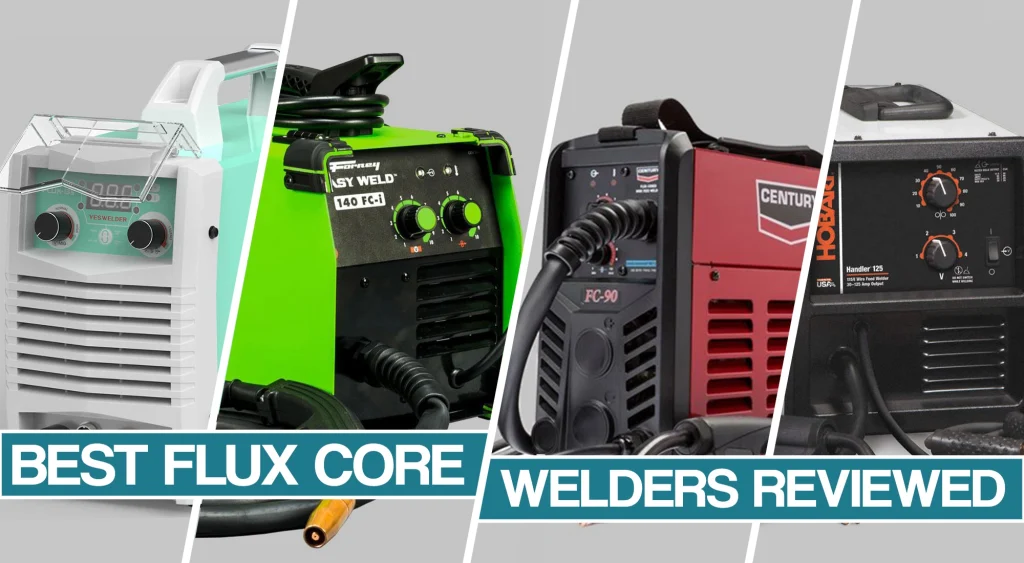
Fortunately, once you’ve got to grips with the options – it becomes much easier to work out which flux core welder will work for your needs.
So, not only have I narrowed the field down to only 6 best flux core welders but we’ve also put together a short buyer’s guide. It will make choosing the right flux core welder for you very easy, indeed.
Best Flux Core Welders Comparison Table
| Image | Name | Voltage | Current | Amperage | Duty Cycle | Process | Check Price |
|---|---|---|---|---|---|---|---|
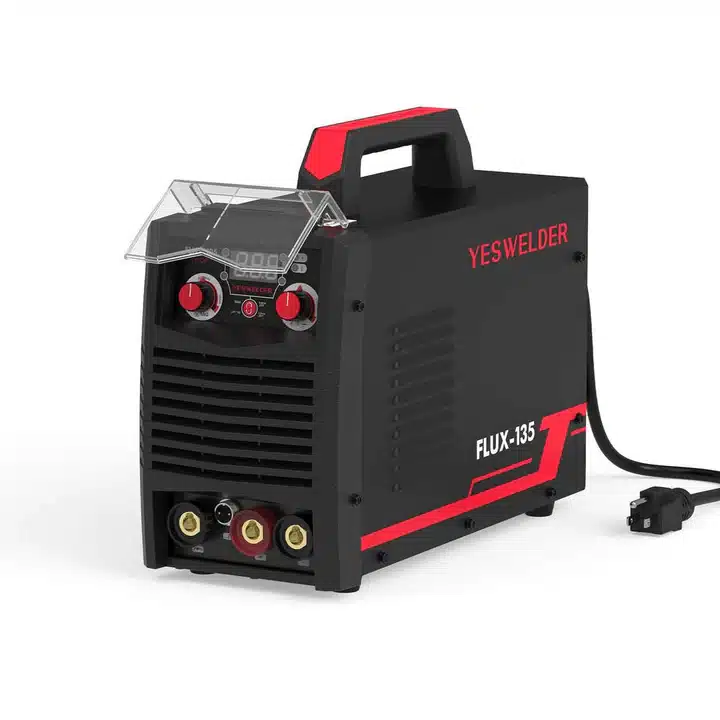 | YesWelder Flux-135-PROGet 10% Off With Coupon: -10% WELDPROS | 110V | DC | 30-135A | 60% @ 135A | Flux Core Stick Lift TIG | Check Price |
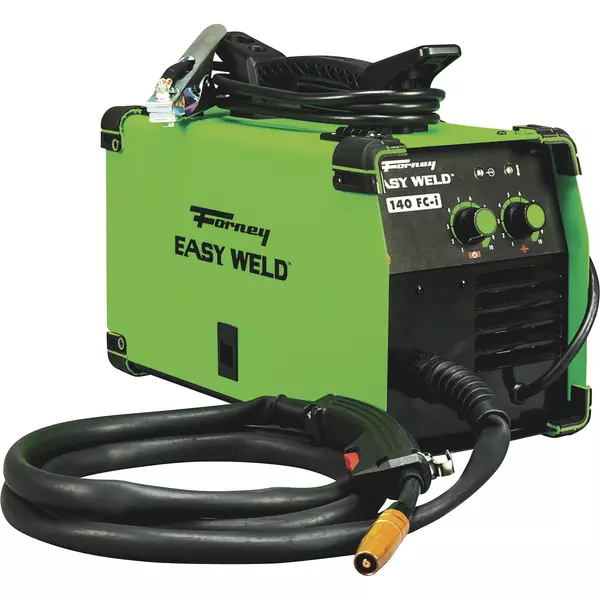 | Forney Easy Weld 261 (140 Amp) | 120V | DC | 140A Max | 30% @ 90A | Flux Core (FCAW) | Check Price |

| Forney Easy Weld 262 141 FC-i | 120V | DC | 140A Max | 30% @ 90A | Flux Core (FCAW) | Check Price |

| Lincoln Electric 90i FC Weld-PAK | 120V | DC | 30-90A | 20% @ 80A | Flux Core (FCAW) | Check Price |

| BESTMIG 135A 3-in-1 Welder | 110V | DC | 30-135A | 60% @ 135A | Flux Core Stick Lift TIG | Check Price |

| WELDPRO 140A 5-in-1 Welder | 110/220V | DC | 30-140A | 60% @ 140A | Flux Core MIG Stick Lift TIG | Check Price |
Best Flux Core Welder Review
Keep in mind that these are 110v/220v welding machines, not the heavy industrial ones that cost from up to $10 000. They will serve perfectly for day to day tasks repair and small to medium welding projects. But you can’t build Noah’s ark with a welder plugged in on household current 110v outlet.
1. YesWelder Flux-135-PRO 110V Flux MIG/Lift TIG/Stick 3-in-1 Gasless MIG Welder – Best Value Flux Core Welder
Best Value Flux Core Welder

YesWelder Flux-135-PRO
The YesWelder Flux-135-PRO is the kind of machine that makes you question why anyone pays double for a brand-name flux core welder. At under $200, you get a 3-in-1 unit that does flux core, stick, and lift TIG. For a garage welder running on 110V, that is a lot of flexibility in a 13-pound box.
| Processes: | Flux Core, Stick, Lift TIG | Rated Output: | 135A @ 60% duty cycle |
| Input Voltage: | 110V | Amperage Range: | 30-135A |
| Weldable Materials: | Steel, Stainless Steel | Current Type: | DC |
| Wire Diameter: | .030″ & .035″ | Weight: | 13.5 lbs |
| Input Phase: | 1-Phase | Warranty: | 1 Year |
What sets this apart from most budget machines is the 60% duty cycle at max output. That is almost unheard of at this price. Most Lincoln and Hobart machines in this class tap out at 20 to 30 percent. You can actually run beads back to back without waiting for the thermal overload to reset.
The synergic MIG settings are a real help for beginners. You pick an amperage and the machine sets wire speed and voltage automatically. If you know what you are doing, you can override it and fine tune from minus 5 to plus 5 volts. Most people will leave it on auto and get decent results.
The wire feed mechanism is plastic with two metal drive rolls. It handles .030 and .035 flux core wire but only takes 4-inch spools. That 2-pound spool runs out faster than you would think. If you weld often, you will be swapping spools constantly. The built in MIG gun is not replaceable without opening the machine, which is annoying if the liner ever wears out.
Get 10% Off With Coupon: WELDPROS
At 13.5 pounds, this thing is light enough to carry anywhere. You can run it off any household outlet. I have seen guys throw it in a truck bed and weld fence posts in a field. The compact size is nice but the internals are tight. If something breaks, you are mailing it back to YesWelder rather than fixing it yourself.
For the money, there is nothing else that gives you stick and lift TIG alongside flux core in a 110V package. The duty cycle alone is worth the price. Just know that you are getting a lightweight inverter machine, not a transformer workhorse that will survive a decade of daily abuse.
Pros
- 60% duty cycle at 135A is class leading at this price
- Synergic settings make it beginner friendly out of the box
- Weighs only 13.5 lbs and runs on any 110V outlet
- 3-in-1 capability adds stick and lift TIG flexibility
- Compact enough to pack in a truck or small shop
- Auto voltage and wire speed adjustment saves setup time
- Handles .030 and .035 flux core wire
- Ten percent off with WELDPROS coupon drops the price even further
Cons
- Built in MIG gun cannot be replaced without disassembly
- Limited to 4-inch spools, constant swapping if you weld often
- Plastic feed mechanism will not hold up to heavy daily use
2. Forney Easy Weld 261, 140 FC-i MIG Welder, 120V – Best Beginner Flux Core Welder
Best Beginner Flux Core Welder
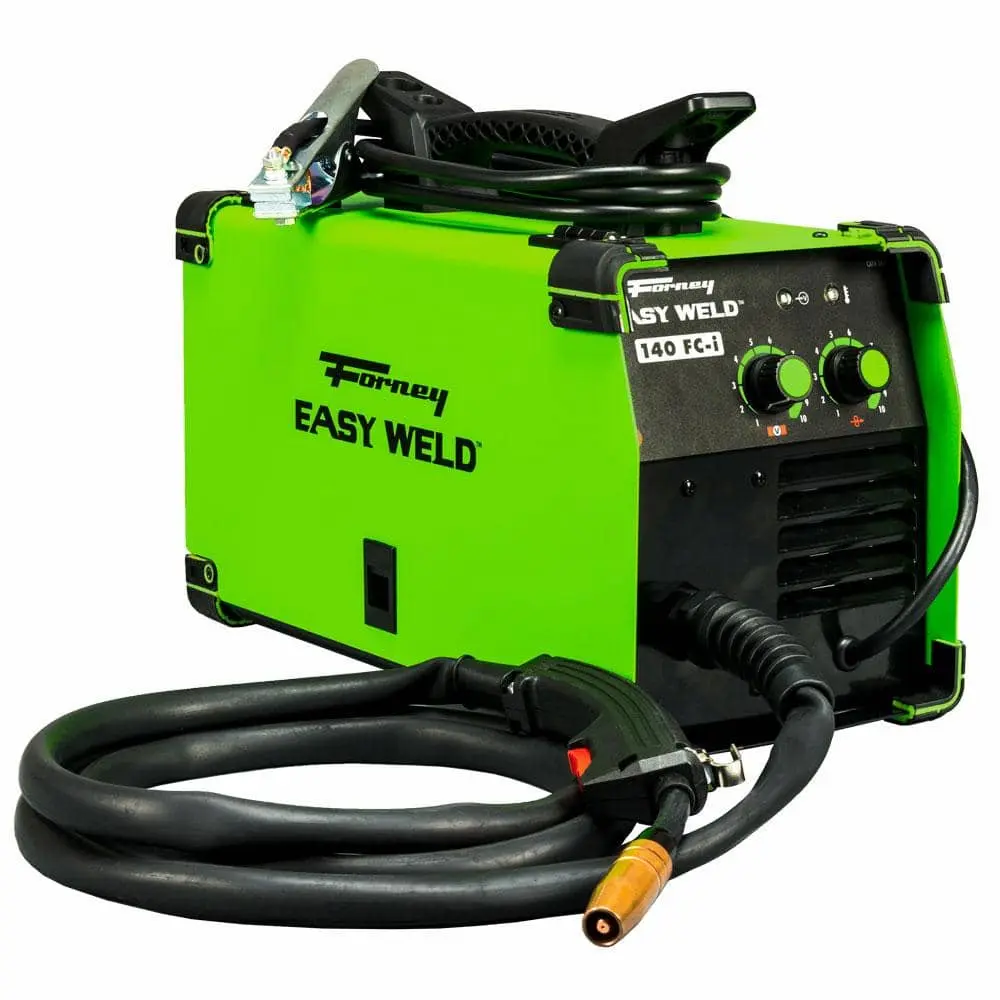
Forney Easy Weld 261
The Forney Easy Weld 261 is the welder I would hand to someone who has never struck an arc before. It runs on a standard 120V outlet, weighs 19 pounds, and does exactly one thing: flux core welding. No multi process confusion, no gas solenoid to worry about, just a straightforward machine that works.
| Processes: | Flux Core (FCAW) | Rated Output: | 90A @ 30% duty cycle |
| Input Voltage: | 120V | Amperage Range: | 140A Max |
| Weldable Materials: | Mild Steel | Current Type: | DC |
| Wire Feed Speed: | 40-700 IPM | Weight: | 19 lbs |
| Weld Thickness: | 24 ga to 1/4 in | Warranty: | 12 Months |
With 140 amps on tap, you can weld up to a quarter inch steel in a single pass. That covers most DIY and repair jobs around the house. The infinite voltage and wire speed controls give you real control once you learn how they interact. It took me about an afternoon of practice to dial in clean beads on 16 gauge sheet metal.
The wire feed goes from 40 to 700 inches per minute, which is a wider range than most machines in this class. You can run .030 or .035 wire and fit 2-pound or 10-pound spools. The 10-pound spool capacity is a big deal if you are doing a project that needs more than a couple hours of arc time.
The ground clamp is nothing special. It works but it is the first thing I would upgrade. Same goes for the included flux core wire. Get yourself a roll of Lincoln NR-211 or Hobart Fabshield and the difference in arc quality is immediately noticeable. Bad wire makes any welder look worse than it is.
At 30 percent duty cycle at 90 amps, you are not running production welds all day. For hobby work and occasional repairs, it is fine. The thermal overload protection works and the inverter technology keeps the arc stable even when your extension cord is a little undersized. I ran mine off a 50-foot 12-gauge cord without issues.
Forney backs this with a 12 month warranty. It is not the longest coverage but their support is responsive. If you want a dead simple flux core machine that will not break the bank and actually produces good welds once you learn it, the 261 earns its spot.
Pros
- Infinite voltage and wire speed controls for fine tuning
- Accepts 2-pound and 10-pound spools for longer run time
- 140 amp output welds up to 1/4 inch steel in one pass
- Weighs only 19 lbs and runs on standard 120V outlets
- Stable inverter arc even on longer extension cords
- Simple single process design with no learning curve traps
- Wire feed range of 40 to 700 IPM covers thin to thick material
- 12 month warranty with responsive US based support
Cons
- Ground clamp is functional but flimsy, worth upgrading
- 30% duty cycle at 90A limits you to shorter weld sessions
- Included sample wire is low quality, budget for better wire
3. Forney Easy Weld 262 141 FC-i Flux Core Welder – Best Compact Flux Core Welder
Best Compact Flux Core Welder
Forney Easy Weld 262
The Forney Easy Weld 262 is the updated version of the 261 and the improvements are not just cosmetic. They fixed the wire feed consistency, added a better ground clamp, and kept the same 140 amp output in a slightly more refined package. If you were on the fence about the 261, the 262 is the one to get.
| Processes: | Flux Core (FCAW) | Rated Output: | 90A @ 30% duty cycle |
| Input Voltage: | 120V | Amperage Range: | 140A Max |
| Weldable Materials: | Mild Steel | Current Type: | DC |
| Wire Capacity: | 4″ & 8″ Spools | Weight: | 19 lbs |
| Weld Thickness: | 24 ga to 1/4 in | Warranty: | 12 Months |
Like its predecessor, this is a pure flux core machine. No gas port, no multi process gimmicks. Just a straightforward 120V welder that does what it says on the box. The arc starts smoothly and the wire feed is noticeably more consistent than the 261. I ran about 3 pounds of .030 wire through it without a single birds nest.
The infinite voltage control is still here and it is still the best feature. You are not stuck choosing between four preset taps. You dial the voltage exactly where you want it and match the wire speed to suit. For thin sheet metal, back the voltage off and slow the wire down. For quarter inch plate, crank it up and run faster.
It takes both .030 and .035 wire on 4-inch or 8-inch spools. The 8-inch spool capacity is an upgrade from the old model. The door mechanism is easier to open and close too. Small things but they add up when you are changing spools often in the middle of a project.
At 19 pounds it is light enough to carry with one hand but heavy enough to not walk around the table when the fan kicks on. The handle is molded into the case, not bolted on as an afterthought. I have used it on a cart and on the garage floor. Both setups work fine though you will want it elevated if the floor is dusty.
The 30 percent duty cycle at 90 amps is the same as the 261. That is the tradeoff for the compact inverter design. It is not a production welder. For a hobbyist who welds on weekends, it is exactly the right amount of machine. The improved wire feed alone makes it worth the small price bump over the 261.
Pros
- Improved wire feed consistency over the 261 model
- Infinite voltage control for real fine tuning, not presets
- Handles .030 and .035 wire on 4-inch or 8-inch spools
- Better ground clamp than the 261 straight out of the box
- Smooth arc starts with minimal spatter on clean metal
- Light 19 lb design with an integrated carrying handle
- Runs on any standard 120V household outlet
- Upgraded door mechanism makes spool changes faster
Cons
- 30% duty cycle at 90A is limiting for longer projects
- Flux core only with no MIG gas upgrade path
- Still an entry level machine, not built for daily shop use
4. Lincoln Electric 90i FC Weld-PAK Flux Core Welder – Best Brand Name Flux Core Welder
Best Brand Name Flux Core Welder
Lincoln Electric 90i FC
The Lincoln Electric 90i FC is the machine you buy when you want a name you trust on the side of the box. Lincoln has been making welders since before inverter technology existed and the 90i shows they know how to build a budget machine without cutting the wrong corners. It runs flux core only and does it well.
| Processes: | Flux Core (FCAW) | Rated Output: | 80A @ 20% duty cycle |
| Input Voltage: | 120V | Amperage Range: | 30-90A |
| Weldable Materials: | Mild Steel | Current Type: | DC |
| Weld Thickness: | Up to 1/8 in | Weight: | Lightweight |
| Wire Diameter: | .030″ & .035″ | Warranty: | 1 Year |
With a 30 to 90 amp range, this is a light duty welder through and through. You are welding sheet metal and thin plate, not trailer hitches. The max output handles up to 1/8 inch steel with decent penetration. For auto body work and thin gauge fabrication, 90 amps is plenty. For anything structural, look at something bigger.
The duty cycle is 20 percent at 80 amps. That is low but it is honest. Lincoln rates their machines conservatively and the thermal protection actually works. I pushed it hard on a 90 degree day and it shut down exactly when the manual said it would. Fifteen minutes later it was back up and running without any drama.
The wire feed mechanism is plastic, which is disappointing at this price point. Hobart puts aluminum drives in their entry level machines. That said, the Lincoln wire drive has been reliable in practice. I have not seen the stripping or cracking issues that plague some cheaper imports. Still, do not expect to run production volumes through it.
One thing Lincoln gets right is the included accessories. The gun, ground clamp, and power cord are all good quality. You also get a hand shield, which is a nice touch for a beginner who might not have bought one yet. The instructional DVD is actually useful, which is more than I can say for most included documentation.
This is not a machine that impresses with specs. It impresses by working every time you pull the trigger. The arc is smooth and stable. The controls are dead simple. If you want a brand name flux core welder for light work and you do not want to gamble on an off brand, the 90i delivers exactly what it promises.
Pros
- Lincoln Electric reliability with conservative honest ratings
- Smooth stable arc on both .030 and .035 flux core wire
- Includes quality gun, ground clamp, hand shield, and useful DVD
- Thermal overload protection works exactly as rated
- Compact and portable at a manageable weight for one person
- Dead simple controls with no confusing settings to mess up
- Handles auto body sheet metal and light fabrication cleanly
- Runs on standard 120V household current with no special wiring
Cons
- Plastic wire feed mechanism at this price point is disappointing
- 20% duty cycle at 80A is low even for light duty work
- Limited to 1/8 inch max thickness, cannot handle structural steel
5. BESTMIG 135A 3-in-1 MIG Flux Core Welder – Best Budget Multi-Process Flux Core Welder
Best Budget Multi-Process Flux Core Welder
BESTMIG 135A
The BESTMIG 135A is one of those machines that makes you do a double take at the price tag. For less than most single process machines, you get flux core, stick, and lift TIG capability in a 110V package. It is clearly aimed at the YesWelder Flux-135-PRO market and the specs are nearly identical.
| Processes: | Flux Core, Stick, Lift TIG | Rated Output: | 135A @ 60% duty cycle |
| Input Voltage: | 110V | Amperage Range: | 30-135A |
| Weldable Materials: | Steel, Stainless Steel | Current Type: | DC |
| Wire Diameter: | .030″ & .035″ | Weight: | ~14 lbs |
| Input Phase: | 1-Phase | Warranty: | 1 Year |
Output runs from 30 to 135 amps with a 60 percent duty cycle at max output. That duty cycle is the headline feature. Most budget inverter welders cap out around 20 to 30 percent. Being able to run at full power for more than half the time means you actually get work done instead of staring at a cooling fan.
The synergic control sets wire speed automatically based on your amperage selection. You can override it with a plus or minus voltage trim. In practice, the auto setting works well enough for most flux core work. I found it slightly less refined than the YesWelder implementation but the difference is small and most beginners will not notice.
It runs .030 and .035 flux core wire on 4-inch spools. The 2-pound spool limit is the same as every other compact machine in this class. The wire drive uses two metal rolls which is better than the single roll setups on some Chinese imports. Feed consistency has been fine through the 3 pounds of Lincoln wire I have put through it so far.
Build quality is about what you would expect at this price. The case is stamped steel, not plastic, which is a pleasant surprise. The knobs have a decent detent feel. The ground clamp is cheap but functional. The included handheld mask is garbage and you should budget for a real welding helmet before you even plug this in.
For a garage welder who wants the option to stick weld or scratch TIG alongside flux core, the BESTMIG 135A is hard to beat on price. Just know that the manual is poorly translated and the included accessories are the bare minimum. The machine itself performs well for what it costs.
Pros
- 60% duty cycle at 135A matches machines costing twice as much
- 3-in-1 capability adds stick and lift TIG to flux core welding
- Synergic control simplifies setup for consistent bead quality
- Stamped steel case is more durable than plastic alternatives
- Dual metal drive rolls provide reliable wire feeding
- 30 to 135 amp range covers thin sheet to medium plate work
- Runs on standard 110V outlets, no special wiring needed
- Price point is extremely competitive for the feature set
Cons
- Limited to 2-pound 4-inch spools, frequent changes needed
- Poorly translated manual makes initial setup confusing
- Included mask and accessories are throwaway quality
6. WELDPRO 140A 5-in-1 Synergic Flux Core Welder – Best Dual Voltage Flux Core Welder
Best Dual Voltage Flux Core Welder
WELDPRO 140A
The WELDPRO 140A is the only machine on this list that gives you dual voltage input. Plug it into 110V for garage work or 220V when you need the full 140 amps. That flexibility alone puts it in a different category from the other five welders here. If you have access to a 220V outlet, this machine does more with it than anything else at this price.
| Processes: | Flux Core, MIG, Stick, Lift TIG | Rated Output: | 140A @ 60% duty cycle (220V) |
| Input Voltage: | 110V / 220V Dual | Amperage Range: | 30-140A |
| Weldable Materials: | Steel, Stainless, Aluminum | Current Type: | DC |
| Wire Diameter: | .030″ & .035″ | Weight: | ~25 lbs |
| Input Phase: | 1-Phase | Warranty: | 1 Year |
At 140 amps on 220V power, you can weld up to 3/8 inch steel with flux core. That is double the thickness most 110V only machines can handle. On 110V, output drops to about 100 amps which still covers most DIY and repair work. The dual voltage auto sensing means you do not have to flip any switches. Just plug in the right adapter and go.
The 5-in-1 label is marketing speak but the capabilities are real. You get flux core, MIG with gas, stick, lift TIG, and a spool gun connection for aluminum. The spool gun is sold separately. Realistically, most buyers will use this as a flux core and stick machine with occasional MIG. The lift TIG is there if you need it for thin stainless.
The 60 percent duty cycle at 140 amps on 220V is impressive. On 110V, duty cycle drops to about 35 percent at 100 amps. The synergic MIG mode sets voltage and wire speed automatically with manual override. I found the synergic settings a bit aggressive on thin material. Backing the voltage trim down a couple notches cleaned it right up.
Build quality is reasonable. The case is sturdy pressed steel with a carry handle that actually feels like it belongs there. The wire drive is all metal which is a nice touch at this price. The ground clamp and electrode holder are basic but usable. You will want to upgrade the MIG gun eventually if you use the gas MIG function regularly.
At around 25 pounds, it is heavier than the inverter only machines but the transformer and dual voltage capability add weight you want. This is not a carry it in one hand kind of welder. It sits on a cart or a bench and stays there. For a shop machine that needs to handle both 110V and 220V input without buying two welders, the 140A earns its keep.
Pros
- Dual voltage 110V and 220V input with auto sensing
- 140 amps on 220V welds up to 3/8 inch steel in one pass
- 5 process capability including MIG with gas and spool gun ready
- 60% duty cycle at 140A on 220V power is class leading
- All metal wire drive mechanism for reliable long term feeding
- Synergic MIG mode with manual voltage trim override
- Sturdy pressed steel case with integrated carry handle
- Spool gun connection for aluminum welding capability
Cons
- Heavier than inverter only machines at around 25 pounds
- Synergic settings run hot on thin material without adjustment
- Included MIG gun is basic, worth upgrading for regular gas use
Flux Core Welder Buying Guide
Most MIG welders can use flux core wires when you change the settings, remove gas canister and change polarity to electrode positive. But then there are these flux core welders
that are solely made for flux core in mind and are the cheaper option.
Then if you decide that the only thing you will be using is FC, maybe the second opinion is better and more wallet-friendly then full MIG welder.

So, let’s take a look at what else needs to go into your purchasing decision:
The Thickness Of The Plate
You want to choose a machine that’s capable of welding a bit more than your usual maximum plate gauge.
Why? Because it’s likely to struggle with your usual maximum – a machine that can handle something thicker will make that weld much easier.
You will also be giving yourself the capacity to weld something thicker if the need ever arises.

As a rule of thumb: the bigger the amperage range, the thicker the plate that you can weld. Check our MIG welder reviews for machines with higher amperage outputs. Make sure to treat this with caution though as some welders buck this trend, so check the manufacturer’s notes before assuming that you can weld thick plate with your preferred choice
Single-Use or Multi-Purpose Use?
Multi-purpose use is possible with any MIG welder, it can use gas or it can go without. This, obviously, gives you more flexibility than a single-use flux core welder but it will cost more.
If you think that you might need to be able to use gas to ensure clean welds, you can invest in a machine that can handle fluxless and flux-cored wire. Many multi-process machines like those in our best MIG welder reviews can deliver excellent results with or without gas.
The Type Of Metal Used
Some welding machines work better than others with different materials. It’s important to note that no flux core welders are capable of working with aluminum whereas you can certainly find a multi-purpose machine that can handle fusing aluminum.
AC or DC
One thing you should pay attention to is whether your machine has AC or DC output. AC outputs don’t produce the best results with flux-core welding.
Though they can fuse to metal plates together weld will be porous and weak, they will also struggle with stainless steel.
So, if you want to work with stainless steel or just want the best quality welds possible, a DC machine like those in our stick welder reviews is the way to go – you’d be better off selecting a welder with a DC output mode.

The Quality Of The Leads
It might seem like a trivial thing but the quality of your leads matters for flux core welders. If they’re not thick enough, long enough and durable enough – the life expectancy of the leads will vary dramatically and you might end up over-confident about the quality that the machine will deliver.
In general, my advice is to go for the longest lead that you can get. It makes a big difference in the flux core welding experience. For torch flux core welding experience. For torch (welding guns) leads, you want 10′-24′ and for ground leads 10′-12′.
Not all the supplied leads come in these lengths but it’s something you should bear in mind as the longer the lead, the more easily you can move around the weld without needing to move the welder. It is also good to have a lengthy power cord.
Things To Consider About The Wire
The two important considerations for wire are the diameter of the wire itself and the diameter of the reel that the wire comes on.
A household or light workshop is going to, usually, run a 0.30″ diameter wire and have a 6-inch reel diameter for welding projects.
However, if you think you might want or need to lay some thicker beads, it would be handy if you could also run a 0.35″ flux wire.
We’d also note that a 6-inch reel is going to run out fairly quickly, we’ve found that if your machine can handle an 8-inch reel.

You can spend significantly less money on wire this way and it will last longer before it needs replacing too.
Frequently Asked Questions (FAQs)
Can You Weld Aluminum With A Flux Core?
No. You can’t use flux core wire with aluminum. It doesn’t get hot enough and the weld quality would be insufficient.
You need Argon gas to shield the weld in order to weld aluminum (even when the flux core wire says on the packaging it can be used with aluminum there will be small print that says “Argon gas recommended with use”).
If you think you will need to weld aluminum, it’s best to buy a multi-purpose MIG welder.
Do You Push or Pull Flux Core Welding?
The old saying is, “If there’s slag, you drag.” This means that you should always pull (or drag) the welding gun. You point it back at the weld pool and then move it away from the finished weld.
Slag gets trapped when the puddle gets ahead of the arc, so you’re trying to ensure that your wire speed is high enough that you can run the gun ahead of the puddle easily.
Is Flux Core Welding Easy?
Easy is, of course, a relative term but because there’s not too much to consider when setting up for flux core welding, it’s easier than many other forms of welding and welding surface doesn’t have to be pristine clean.
We’d expect most people to be able to be doing some welding within an hour of unboxing their flux welder. Though it may take longer for you to master keeping slag to a minimum as you weld.
Conclusion
The YesWelder Flux-135-PRO is our top pick. A 60 percent duty cycle at 135 amps in a 13 pound package that runs on any household outlet. At under 200 dollars with the WELDPROS coupon, nothing else touches the value. The synergic MIG mode and 3-in-1 versatility make it the best flux core welder for beginners and hobbyists.
For a simple single-process machine from a well-known brand, the Forney Easy Weld 261 and 262 are both solid options. The 261 is the budget pick while the 262 refines the formula with better wire feeding. Lincoln’s 90i FC earns its spot for anyone wanting that red brand reliability on light-duty work.
The WELDPRO 140A stands alone for dual voltage flexibility. Plug into 110V or 220V and you open up thicker material and faster work. Whatever your budget or workspace, one of these six flux core welders will get the job done.






