
Years of my welding experience have taught me that the welding gloves are well worth the investment. Most of the welder injuries are hands or face related. Gloves should provide safety, dexterity, and durability.
Is that too much to ask?

Well, apparently it is. Most gloves on the market are cheap shadows of what a good welder’s glove should be.
Depending on the type of welding you are working on, gloves can severely impact your health and the quality of work.
Welding gloves should be durable, flexible, and long-lasting, especially if you have to pay for them yourself! On that note, I have put down a list below of the best welding gloves I have been using in the past years.
So please check the reviews and make the best decision before you spend your hard-earned money.
Here are our recommendations for the best welding gloves in the four major categories; Stick, MIG, TIG, and Flux Core. For full-body protection, also check our welding protective gear guide.
Quick Comparison Table
| Image | Name | Material | Heat Rating | Length | Lining | Size | Check Price |
|---|---|---|---|---|---|---|---|
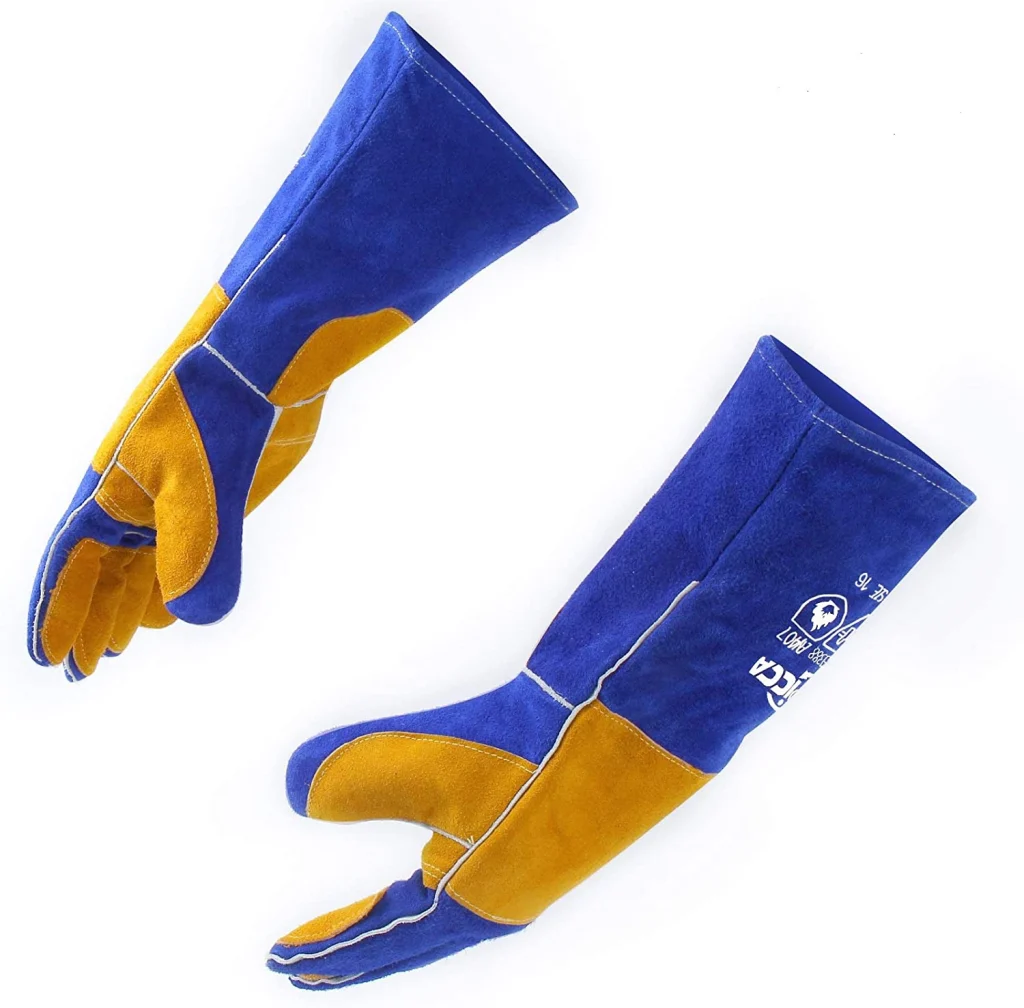 | RAPICCA Leather Forge Welding Gloves | Cow split shoulder leather | 932°F (500°C) | 16" + 7.5" sleeve | Kevlar padding, flame-retardant liner | Universal | Check Price |
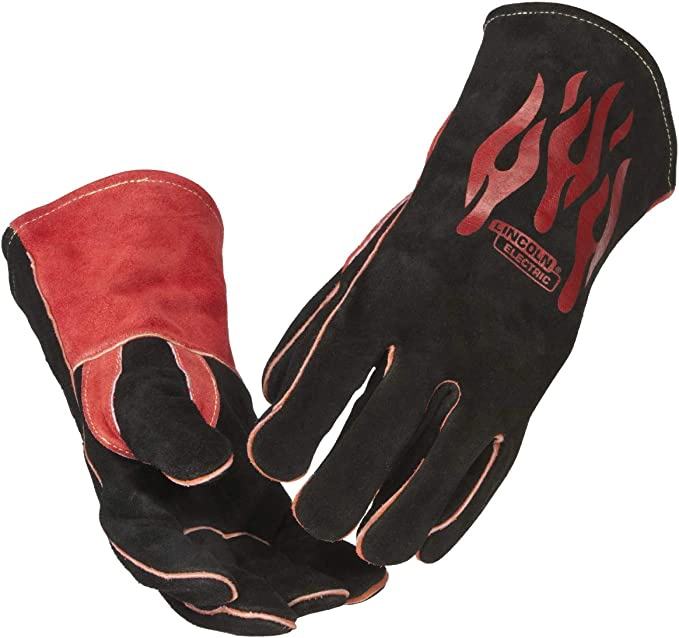 | Lincoln Electric Traditional MIG/Stick Gloves | Top grain leather | High heat (MIG/Stick rated) | 14" | Cotton-lined, Kevlar thread stitching | One size fits most | Check Price |
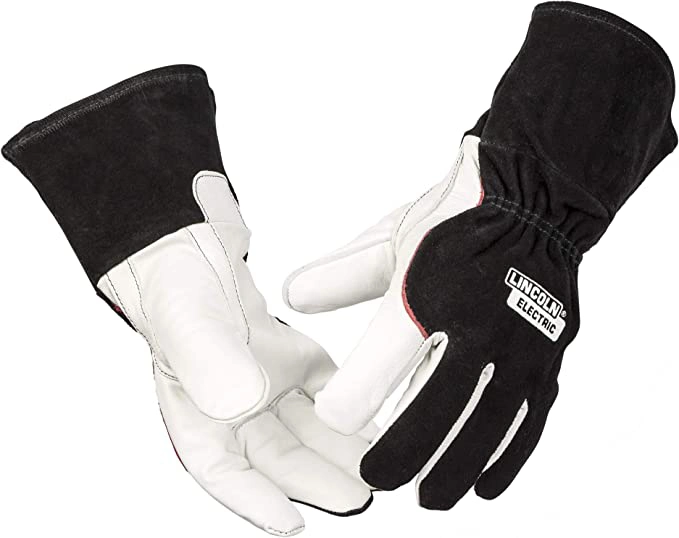 | Lincoln Electric DynaMIG HD Professional | Top grain + split cowhide | High heat (MIG rated) | 13.5" | 3-2 layer liner, padded palm | M – XL | Check Price |
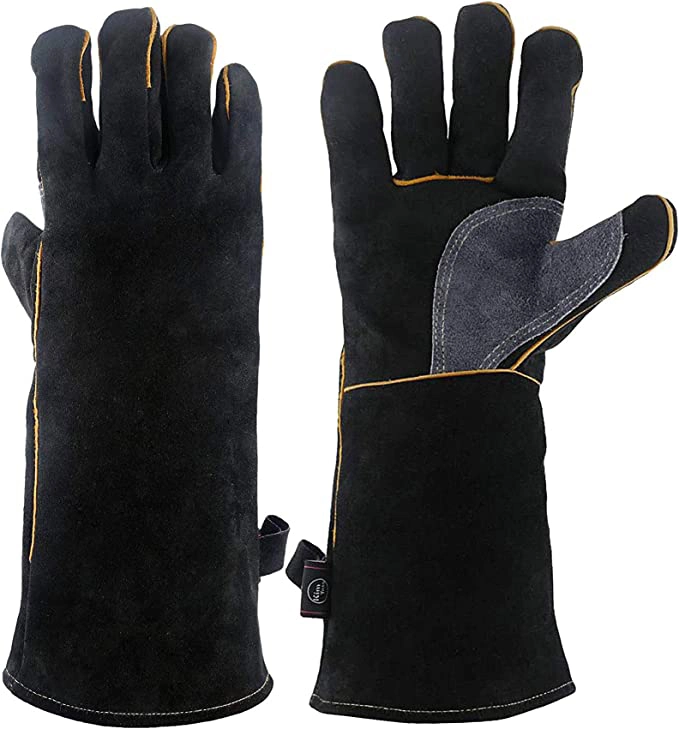 | KIM YUAN Extreme Heat & Fire Resistant | Cow split leather, Kevlar stitched | 662°F (350°C) | 14" | Double-layered palm, lined | One size | Check Price |

| LeaSeek Leather Forge Welding Gloves | Cow split leather (1.2mm thick) | 662°F (350°C) | 14" | Insulated lining | One size fits most | Check Price |
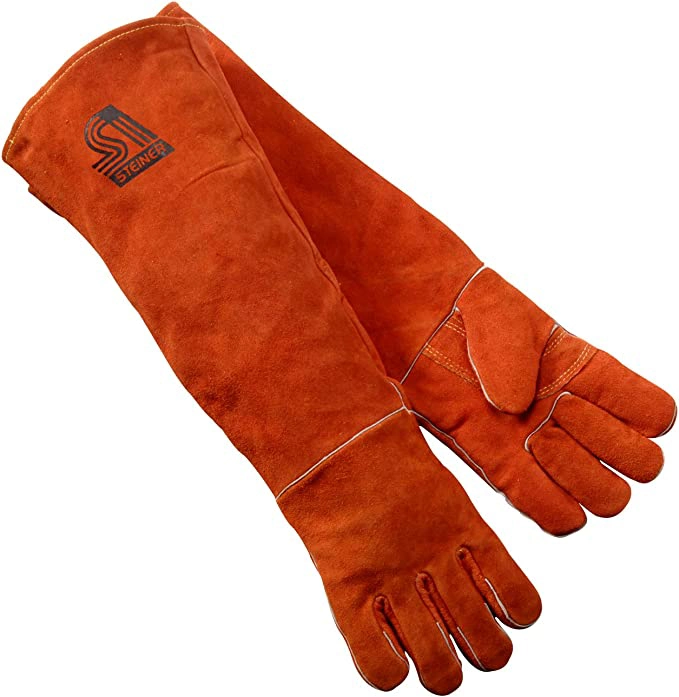 | Steiner 21923-L Welding Gloves | Shoulder split cowhide | High heat (heavy-duty rated) | 23" long sleeve | Foam-lined, Kevlar stitched | L – XL | Check Price |
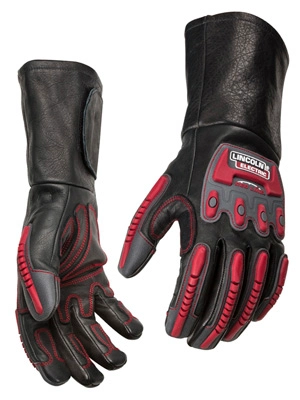 | Lincoln Electric Roll Cage Welding/Rigging | Grain cowhide | High heat (welding/rigging rated) | 14" | Kevlar stitching | M – XL | Check Price |
Best Welding Gloves Reviews
1. RAPICCA Leather Forge Welding Gloves – Best Heat Protection
Best Heat Protection
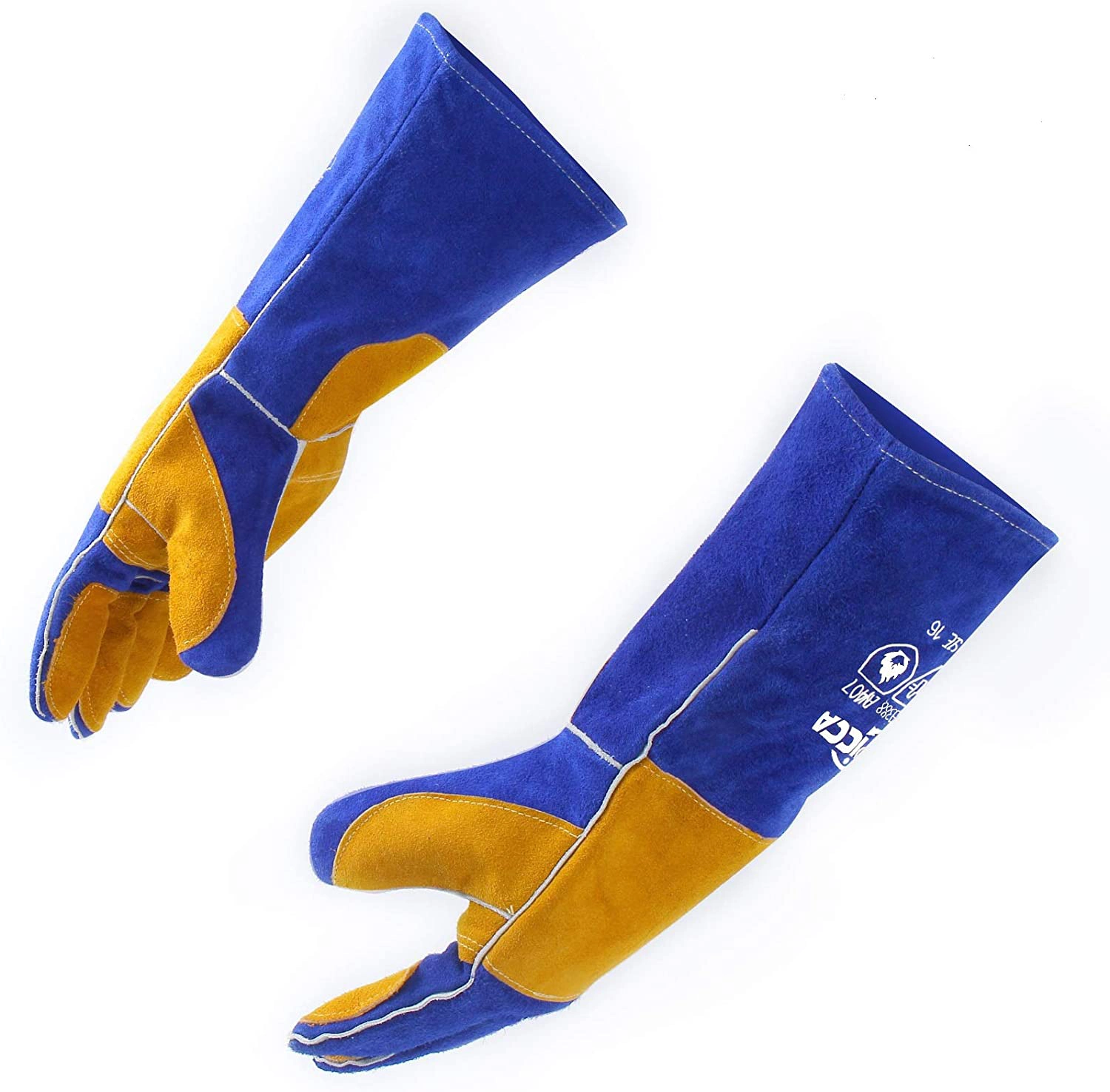
RAPICCA Leather Forge Welding Gloves
I’ve burned through more pairs of welding gloves than I care to count, and the RAPICCA Leather Forge gloves are the ones I grab when the job involves serious heat. They’re rated to 932°F, which puts them well ahead of most gloves in this price range. For stick welding at high amperage, that extra headroom matters.
| Material: | Cow split shoulder leather | Heat Rating: | 932°F (500°C) |
| Length: | 16″ + 7.5″ sleeve | Lining: | Kevlar padding, FR liner |
| Palm: | Double-layered leather | Stitching: | Kevlar reinforced |
| Cuff: | Extended gauntlet | Size: | Universal |
| Best For: | Stick & heavy MIG | Price: | See Amazon |
The 16-inch body plus a 7.5-inch sleeve means these cover your forearms completely. If you’ve ever had a glob of molten slag roll down your wrist because your gloves were too short, you know why this matters. The extended gauntlet design isn’t a gimmick — it’s genuinely saved my skin more than once.
The palm and fingers get a double layer of split shoulder cowhide, which RAPICCA claims is oil-resistant, abrasion-resistant, and puncture-resistant. In practice, the puncture resistance is what I’ve noticed most. Handling sharp scrap metal and doing wire brush cleanup, these hold up better than single-layer alternatives.
Kevlar padding runs through all five fingers and across the back of the hand. It’s stitched in, not just glued, which means it stays put after weeks of use. The flame-retardant liner underneath adds another layer without making the glove feel like an oven mitt — there’s still enough feel to grab a stinger and strike an arc without fumbling.
Dexterity is the trade-off with any heavy glove, and these are no exception. They’re not TIG gloves. If you’re doing delicate work with thin filler rod, look elsewhere. But for stick, flux core, and heavy MIG, the balance between protection and control is about right.
At the price, these are hard to beat for the heat rating you get. Universal sizing means you can’t dial in a perfect fit, but the internal liner takes up enough slack that most hand sizes can make them work. If you’re welding at high temps and tired of gloves that fall apart in a month, these are worth a shot.
Pros
- 932°F heat rating — highest in this lineup
- Kevlar padding on all five fingers and back of hand
- Double-layer palm holds up to puncture and abrasion
- Flame-retardant liner adds protection without bulk
- Oil and abrasion resistant shoulder split leather
- Reinforced Kevlar stitching throughout stress points
- Excellent value for the heat protection level
Cons
- Universal sizing — can’t get a tailored fit
- Too bulky for TIG or detail work
- Break-in period takes a few days of use
3. Lincoln Electric DynaMIG HD Professional – Best MIG-Specific Glove
Best MIG-Specific Glove
Lincoln Electric DynaMIG HD Professional MIG Welding Gloves
The DynaMIG HD is Lincoln’s purpose-built glove for MIG welders, and it shows in the design. Where most gloves try to be decent at everything, this one commits to doing one thing well. The white top grain leather on the back and black split cowhide on the palm isn’t just for looks — each material is placed where it does the most good.
| Material: | Top grain + split cowhide | Heat Rating: | High heat (MIG rated) |
| Length: | 13.5″ | Lining: | 3-2 layer liner, padded palm |
| Palm: | Padded, reinforced | Stitching: | Kevlar reinforced |
| Cuff: | Slip-on design | Size: | M–XL (selectable) |
| Best For: | Dedicated MIG welding | Price: | See Amazon |
The 3-to-2 layer liner system is what sets these apart from the Traditional model. Three layers on the back of the hand where spatter hits hardest, tapering to two layers in the palm where you need tactile feedback. It’s a smart compromise between heat protection and trigger control.
At 13.5 inches, these are slightly shorter than most welding gloves, and that’s intentional. MIG welding doesn’t throw the same volume of spatter as stick, so you don’t need the forearm coverage as much. What you gain is better wrist mobility, which translates to smoother bead control when you’re running long passes.
The padded palm is a nice touch for MIG work. You’re holding a trigger for extended periods, and the extra cushioning reduces hand fatigue noticeably. It also helps dampen vibration from the gun, which you don’t think about until you try a pair of gloves without it.
Sizing is where the DynaMIG pulls ahead of most competitors. You get M through XL — actual sizes, not the vague ‘one size fits most’ that leaves half of us with fingers swimming in extra leather or pinched at the knuckles. Pick your size and the fit is right from day one.
These cost more than Lincoln’s Traditional gloves, and you have to decide if the MIG-specific features are worth the premium. If you mostly weld MIG and want gloves that feel like they were designed for it rather than adapted to it, the answer is probably yes. If you jump between processes constantly, the Traditional might be more versatile.
Pros
- Purpose-built for MIG with process-specific design choices
- 3-2 layer liner system balances heat protection and dexterity
- Selectable sizing (M–XL) for a proper fit
- Padded palm reduces trigger fatigue on long runs
- Top grain + split cowhide combo puts right material in right place
- Slip-on design — no straps or buckles to fail
- Kevlar reinforced throughout stress areas
Cons
- More expensive than Lincoln Traditional model
- Shorter length means less forearm coverage for stick work
- White leather shows dirt and spatter marks quickly
4. KIM YUAN Extreme Heat & Fire Resistant Gloves – Best Budget Heat Protection
Best Budget Heat Protection
KIM YUAN Extreme Heat & Fire Resistant Gloves
KIM YUAN isn’t a name that comes up in shop talk the way Lincoln or Miller does, but their Extreme Heat gloves have built a quiet following among welders who don’t want to spend $30+ on something that’s going to get burned through regardless. At 662°F, the heat rating isn’t class-leading, but it’s honest — and for most home and light shop work, it’s enough.
| Material: | Cow split leather, Kevlar stitched | Heat Rating: | 662°F (350°C) |
| Length: | 14″ | Lining: | Double-layered palm |
| Palm: | Double-layer reinforced | Stitching: | Kevlar thread |
| Cuff: | Standard gauntlet | Size: | One size |
| Best For: | Budget-conscious stick/MIG | Price: | See Amazon |
The cow split leather feels stiffer out of the package than top grain options, and there’s a break-in period you’ll need to get through. After about a week of use, they soften up to a workable level. The Kevlar stitching throughout, including the palm and finger seams, is more than I expected at this price point.
The double-layered palm is the standout feature. A lot of budget gloves skimp here with a single layer that wears through fast once you start dragging material or handling hot metal. KIM YUAN put the extra material where it counts, and the palm holds up noticeably better than other gloves in this price bracket.
At 14 inches, these give you standard wrist coverage. Not the forearm wrap of the RAPICCA, but enough for MIG and moderate stick work. The gauntlet cuff is basic — no special moisture-wicking liner or padded interior — but it stays in place and doesn’t ride up while you work.
The one-size design is the biggest limitation. If your hands are on the smaller side, there’s going to be extra room at the fingertips, which affects dexterity for filler rod work. If you have larger hands, they might feel snug until they break in. This is the trade-off for the price.
For a weekend welder or someone who does occasional repair work, these make more sense than a $40 pair of gloves that’ll get just as dirty and worn. They’re not premium, and they don’t pretend to be. But they protect your hands, hold up to regular use, and cost less than a tank of gas.
Pros
- Very affordable — among the best value per dollar spent
- Kevlar stitching throughout, including palm and finger seams
- Double-layered palm survives abuse better than competitors
- 662°F rating is honest and sufficient for most home/shop work
- Cow split leather softens well after break-in period
- Good choice for beginners who will burn through gloves learning
- Lighter weight than dedicated forge gloves for better dexterity
Cons
- One size only — fit is hit or miss depending on hand size
- Stiff out of the box, needs a solid week to break in
- 662°F rating limits use on high-amperage stick work
5. LeaSeek Leather Forge Welding Gloves – Best All-Purpose Forge Glove
Best All-Purpose Forge Glove
LeaSeek Leather Forge Welding Gloves
LeaSeek positions these as forge gloves that can handle welding duty, and after putting a pair through several weekends of mixed stick and flux core work, that dual-purpose claim mostly holds up. The 1.2mm cow split leather is thicker than what you get on most dedicated welding gloves, and you feel that heft the first time you pick them up.
| Material: | Cow split leather (1.2mm) | Heat Rating: | 662°F (350°C) |
| Length: | 14″ | Lining: | Insulated lining |
| Palm: | Single layer, reinforced | Stitching: | Double-stitched seams |
| Cuff: | Standard gauntlet | Size: | One size fits most |
| Best For: | Forge, foundry, general welding | Price: | See Amazon |
The insulated lining is what separates these from a basic welding glove. It’s designed to block radiant heat, which is the kind of heat you deal with around a forge or foundry work — not just direct spatter. For welding, it’s overkill in some situations but useful when you’re working close to a preheated workpiece or doing multiple passes on thick material.
At 14 inches, the length is standard. The gauntlet doesn’t have the extended sleeve of the RAPICCA, but it covers enough to keep spatter off your wrists in most positions. The double-stitched seams run through the stress points and I haven’t seen any separation after a couple months of weekend use.
Dexterity is the weak point here. The 1.2mm leather combined with the insulated lining makes these noticeably thicker in the fingers than purpose-built welding gloves. Picking up a 1/8″ 7018 rod isn’t hard, but feeding 3/32″ filler through your fingers takes some getting used to. These aren’t the glove for precision work.
The heat rating of 662°F is adequate but not exceptional. For forge work, that’s on the lower end of what you’d want for handling hot metal directly. For welding, it’s fine for MIG and moderate stick, but I wouldn’t trust these for prolonged high-amperage stick work where the workpiece is radiating serious heat back at your hands.
If you split your time between welding and forge or foundry work, having one pair of gloves that handles both is convenient. If you’re strictly a welder, there are more specialized options that’ll give you better dexterity. But for the price, the LeaSeek delivers a solid, durable glove that handles heat better than most welding-only options in this range.
Pros
- 1.2mm thick cow split leather — more substantial than standard gloves
- Insulated lining blocks radiant heat, excellent for forge and foundry
- Double-stitched seams at all stress points for durability
- Genuinely dual-purpose — welding and high-heat handling
- Thick leather provides good puncture resistance from sharp metal
- Comfortable once broken in, insulation doesn’t irritate skin
- Good value for the leather thickness and insulation level
- Holds up to flux core spatter better than thinner alternatives
Cons
- Thicker leather reduces dexterity for small filler rod
- 662°F rating — lower than some competitors in this review
- Insulated lining runs warm in summer shop conditions
6. Steiner 21923-L Welding Gloves – Best Long Sleeve Protection
Best Long Sleeve Protection
Steiner 21923-L Welding Gloves
The Steiner 21923-L is the glove you buy when you’re tired of burning your forearms. At 23 inches, the sleeve extends well past the elbow, which makes these the only option in this review that provides anything close to full arm protection. If you do overhead stick welding or work in positions where spatter rains down on your arms, this is the glove that solves that problem.
| Material: | Shoulder split cowhide | Heat Rating: | High heat (heavy-duty) |
| Length: | 23″ long sleeve | Lining: | Foam-lined, Kevlar stitched |
| Palm: | Reinforced shoulder split | Stitching: | Kevlar throughout |
| Cuff: | Full 23″ gauntlet sleeve | Size: | L–XL |
| Best For: | Overhead & heavy stick welding | Price: | See Amazon |
Shoulder split cowhide is the leather grade you want for heavy-duty protection. It’s taken from the thickest part of the hide and has a denser fiber structure than lower grades. Steiner uses it throughout the glove, not just in the palm, and the result feels almost armor-like. The burnt orange color is also nice for visibility — you can spot these across a cluttered shop floor.
Kevlar stitching runs through every seam, including the full length of the 23-inch sleeve. The foam lining on the interior is comfortable against bare skin and adds another layer of insulation. It’s not the breathable cotton of the Lincoln Traditional, but when you’re doing overhead work and sparks are falling on your arms, breathability isn’t the priority.
The trade-off for all this protection is weight and dexterity. These are heavy gloves. You won’t be picking up small screws or feeding thin filler rod with any precision. For stick welding at high amperage, overhead pipe work, or any situation where arm protection matters more than fingertip feel, the bulk is worth it.
Sizing runs L to XL, which means smaller hands are out of luck. But the shoulder split cowhide and foam liner combination does conform somewhat with heat and use. After a few sessions, the leather molds to your grip pattern and the initial stiffness in the fingers eases up.
At the top of the price range in this review, the Steiner isn’t an impulse buy. But compared to treating burns on your forearms or replacing cheaper gloves every few weeks, it pays for itself if you do the kind of welding that demands this level of coverage. Overhead stick welders, pipe welders, and anyone who works under equipment — this is your glove.
Pros
- Shoulder split cowhide throughout for maximum durability
- Kevlar stitching on every seam including full sleeve length
- Foam-lined interior for comfort during long overhead sessions
- Burnt orange color for high visibility in shop environments
- Molds to hand shape with heat and use for improved fit
- Ideal for overhead stick, pipe welding, and under-equipment work
- Heavy-duty enough for industrial daily use without frequent replacement
Cons
- Heavy and bulky — poor dexterity for fine or precision work
- L–XL sizing only excludes smaller-handed welders
- Most expensive glove in this review by a noticeable margin
7. Lincoln Electric Roll Cage Welding/Rigging Gloves – Best Multi-Purpose
Best Multi-Purpose
Lincoln Electric Roll Cage Welding/Rigging Gloves
The Roll Cage is Lincoln’s answer for welders who also handle rigging. If your day involves switching between a stinger and a chain hoist, you know the frustration of gloves that are too stiff for rigging work or too thin for welding. These thread the needle better than most.
| Material: | Grain cowhide | Heat Rating: | High heat (welding/rigging) |
| Length: | 14″ | Lining: | Kevlar stitching throughout |
| Palm: | Padded, double-reinforced | Stitching: | Kevlar thread |
| Cuff: | Slip-on with pull tab | Size: | M–XL |
| Best For: | Welding + rigging combo work | Price: | See Amazon |
Grain cowhide gives these a different feel than the split leather on most welding gloves. It’s smoother, more flexible out of the box, and develops a better grip pattern as it wears. The Kevlar stitching runs throughout, which is necessary when you’re pulling chain or handling wire rope — abrasion on the seams is what kills rigging gloves fast.
The padded palm is reinforced with a double layer, positioned exactly where load-bearing contact happens. Lincoln clearly thought about the wear pattern of someone who grabs rigging hardware regularly. The padding is dense enough to protect against heat but thin enough that you can still feel a shackle pin or a chain link through it.
At 14 inches, the length is standard for a welding glove, which means you get decent wrist coverage without the bulk of a full gauntlet getting in the way during rigging work. The slip-on design with a pull tab is convenient when you’re taking gloves on and off between tasks — no straps or buckles to mess with.
Heat protection is adequate for MIG and light to medium stick work, but these aren’t built for the kind of sustained high heat you get from heavy structural welding. The grain cowhide prioritizes flexibility over raw heat resistance, which is the right call for a multi-purpose glove.
Sizing from M to XL means most hands can find a decent fit, and the grain leather breaks in faster than the split leather alternatives. If you’re a welder who also handles material, sets up rigging, or does fabrication that involves both hot work and heavy lifting, these save you from carrying two pairs of gloves.
Pros
- Grain cowhide is flexible out of the box with minimal break-in
- Double-layer padded palm positioned for rigging load points
- Smooth leather develops excellent grip as it wears in
- Kevlar stitching survives chain and wire rope abrasion
- Slip-on design with pull tab for quick on/off between tasks
- Lighter and more flexible than dedicated heavy welding gloves
- Selectable sizing (M–XL) for proper hand fit
- Eliminates need to carry separate welding and rigging gloves
Cons
- Not built for sustained high-heat structural welding
- Grain leather costs more than comparable split leather gloves
2. Lincoln Electric Traditional MIG/Stick Gloves – Best Value All-Rounder
Best Value All-Rounder
Lincoln Electric Traditional MIG/Stick Welding Gloves
Lincoln Electric’s Traditional gloves are the pair I see most often in fab shops, and it’s not because they’re flashy. They’re not. The two-tone black and red flame design is about as exciting as these get. What keeps them on welders’ hands is the fit and the durability-to-price ratio.
| Material: | Top grain leather | Heat Rating: | High heat (MIG/Stick) |
| Length: | 14″ | Lining: | Cotton-lined, Kevlar stitched |
| Palm: | Reinforced stress points | Stitching: | Kevlar thread |
| Cuff: | Inside moisture-absorbing | Size: | One size fits most |
| Best For: | MIG, Stick, general fab | Price: | See Amazon |
Top grain leather with Kevlar thread stitching at the stress points means these survive the kind of abuse that shreds cheaper gloves in weeks. I’ve seen fabricators run these daily for months before the fingertips finally give out. The reinforced palm and thumb crotch take the brunt of the wear and keep going.
The cotton liner is surprisingly comfortable. It wicks moisture instead of trapping it, which matters when you’re under a hood for hours. The inside cuff helps too — it absorbs sweat before it can run down your arm. Small detail, but after an 8-hour day in July, you notice.
At 14 inches, these don’t give you the forearm coverage of a full gauntlet, but for MIG and general stick work, it’s enough. The thumb design deserves a mention — it’s gusseted in a way that lets you grip a stinger or MIG gun naturally, without that stiff, overstuffed feeling you get from cheaper gloves.
These aren’t rated for extreme heat like the RAPICCA, so if you’re running 300+ amps on thick plate all day, look elsewhere. For everything else — light to medium stick, MIG, even flux core — they hold up fine. I wouldn’t use them for TIG, but they weren’t built for that.
For what Lincoln charges, these punch above their weight. They’re not the cheapest gloves on the market, but they’re the cheapest ones I’d actually trust on a job site. If you’re a hobbyist or a pro who goes through gloves fast, these deliver enough durability to justify the cost.
Pros
- Top grain leather with Kevlar stitching at stress points
- Comfortable cotton liner with moisture-wicking properties
- Gusseted thumb design for natural grip and dexterity
- Inside moisture-absorbing cuffs for long shifts
- Proven durability in daily fabrication environments
- Good value — professional quality at a reasonable price
- Light enough for MIG, tough enough for stick
- Lincoln name means consistent quality control
Cons
- One-size design — won’t fit very small or large hands
- Not rated for extreme heat or heavy industrial stick work
Choosing the Type of Welding Gloves Depending on the Welding Process
1. Dexterity
Flexibility and dexterity are high on your list of considerations for TIG and Flux Core due to the small wires used. It is achieved with thin fabric between the fingers. Protection and flexibility are highly important with Flux Core, which means specialized gloves are needed. Depending on the types of welding and the wide range of tasks you do the mobility will impact your glove choice.
2. Fitting
Be sure your gloves fit your hands with a comfortable fit. Oversized gloves are easily caught in a weld and tend to catch hot slag. Gloves that are too small will bind your movement and cause you to sweat. So check different sizes.
3. Sleeves
Sleeves are recommended for MIG, Stick, and Flux Core gloves for welding because of high hand coverage. TIG welders may not need sleeved gloves unless doing an overhead weld- in which case gloves are always recommended.
Dexterity or Durability of welding gloves for Stick Welding
Many stick welding applications call for gloves that are long-sleeved to protect from slag spatter and sparks. They do not need to offer you a great deal of freedom as the wrists and finger do not need to do a lot of moving. But it’s nice to have the extra manual dexterity that a superior glove can offer as long as the protection level isn’t reduced.
The most important factor for stick welding is protection due to the fact that high heat and spatter can put a serious damper on your day. The best gloves will have a reinforced layer between the thumb and forefinger since that’s where most of the hot slag is going to fall. An area of added protection can sometimes extend up onto the forefinger, but this is not necessary.
Finally, the best Stick welding gloves are going to be made from time-tested, high-quality materials like elk skin, cowhide, or pigskin.
Durability And is more important than Dexterity with MIG
MIG Welding gloves have roughly the same requirements as Stick gloves. Proper pair of welding gloves for MIG welding needs to be able to protect your hands from splatter and sparks that Metal inert gas welding produces and to offer high heat protection while offering a reasonable amount of flexibility. Again, flexibility is not held at a premium, but it is welcome when it is available for MIG welding.
What else?
Gloves for MIG welding earn high marks for added strength for the thumb and the forefinger since these get the most exposure this goes for both mig stick welding gloves. A thick area of protection should be found at the back of your non-dominant hand to protect the hand while in the common resting position.
As with stick welding gloves, elk skin is a good material. Other good materials are deerskin and cowhide.
Gloves For Flux-Core welders
Flux Core uses some of the highest amperage ranges. Therefore, when welding with Flux Core, you need suitable gloves that provide the most protection you can get.
Because Flux Core welding produces a lot of various debris, blowback and high levels of smoke you need the most durable gloves you can find. So think hard which brand you use to prevent injuries. This will be highly familiar to every Flux Core welder. Flux Core gloves should be exceptionally sturdy with a reinforced area between the thumb and forefinger since it is there that the wear will happen soonest from holding the welding gun.
What kind of materials can endure these conditions?
Flux welding gloves need to be made from the strongest materials available such as side-split cowhide, elk, or thick deerskin and should be sewn with kevlar threads. These materials will also withstand higher temperatures and offer higher level of heat protection. In the best leather welding gloves for this process, you will find aluminized material on the top to reflect heat away from your hand.
Material For Welding Gloves
Cowhide, Elkskin, Deerskin, and Pigskin are the more durable materials for leather welding gloves. Choose these for most applications. Goatskin or Kidskin (Kidskin welding gloves are basically the goatskin but made from younger goat they are softer and smoother then goatskin made from older goats) gloves are best for TIG welding.
FAQ
What kind of gloves do welders wear?
Welders wear different types of welding gloves depending on the type of work and the welding process they are using. Automated welding, for instance, requires no gloves at all. But some other processes that create lots of spatter will require thicker gloves for added protection. The more heat is emitted during work, the more durable gloves a welder will need.
How long should welding gloves last?
A typical welding glove will last somewhere between 1 to 8 weeks. Gloves are exposed to all kinds of harm during work. The more you use them and the harder the work is the shorter will they last. They may tear or shrink depending on the situation. Those with heat resistance and heat shields are going to last longer.
How much are welding gloves?
The price of welding gloves differs greatly based on the manufacturer and the quality. Those that are made for harder work and manufacturing will cost more. However, there are still some quality ones that come for a lower price offered by a not-so-famous brand. The more protection and the more usability the glove offers the pricier will it be. This is specifically characteristics for multi-purpose gloves that are used for an added type of work besides welding.
What is the difference between MIG and TIG welding gloves?
The difference between MIG and TIG welding gloves is in their padding. MIG welders usually rest their non-dominant hand while doing their work. The design is such that a welder may use that hand to quickly take off the glove if needed. Also, due to more heat, these gloves provide more protection for the whole hand. As for TIG welding. the gloves used there are much thinner and use softer materials. Since this type of welding requires precision the gloves are designed in a way to provide the welders movability when needed. The danger in TIG welding comes from sparks and the blinding light and not really due to spatter that comes off.
In Conclusion
Your hands are your most valuable welding tools — and the right gloves keep them safe. For heavy-duty MIG and stick welding, the Lincoln Electric Traditional gloves deliver the heat protection and durability you need. For precision TIG work, the Lincoln DynaMIG HD offers the dexterity thinner materials demand. On a budget, the RAPICCA Leather Forge gives you 932°F heat resistance with Kevlar padding at a fraction of the price. Pair your gloves with a quality welding helmet and welding boots for complete protection from head to toe. Take the time to choose the right pair — your hands will thank you for years to come.






