
Some welders love laces. Some would rather never kneel on a dirty shop floor to untie them again. If you sit in the second group, the men’s Timberland PRO Powerwelt is the pull-on steel toe work boot we put on our best welding boots list, and it earns the slot for reasons that go beyond skipping laces.
Timberland PRO markets this as a farm and ranch boot, but the spec sheet reads like it was written for light industrial work
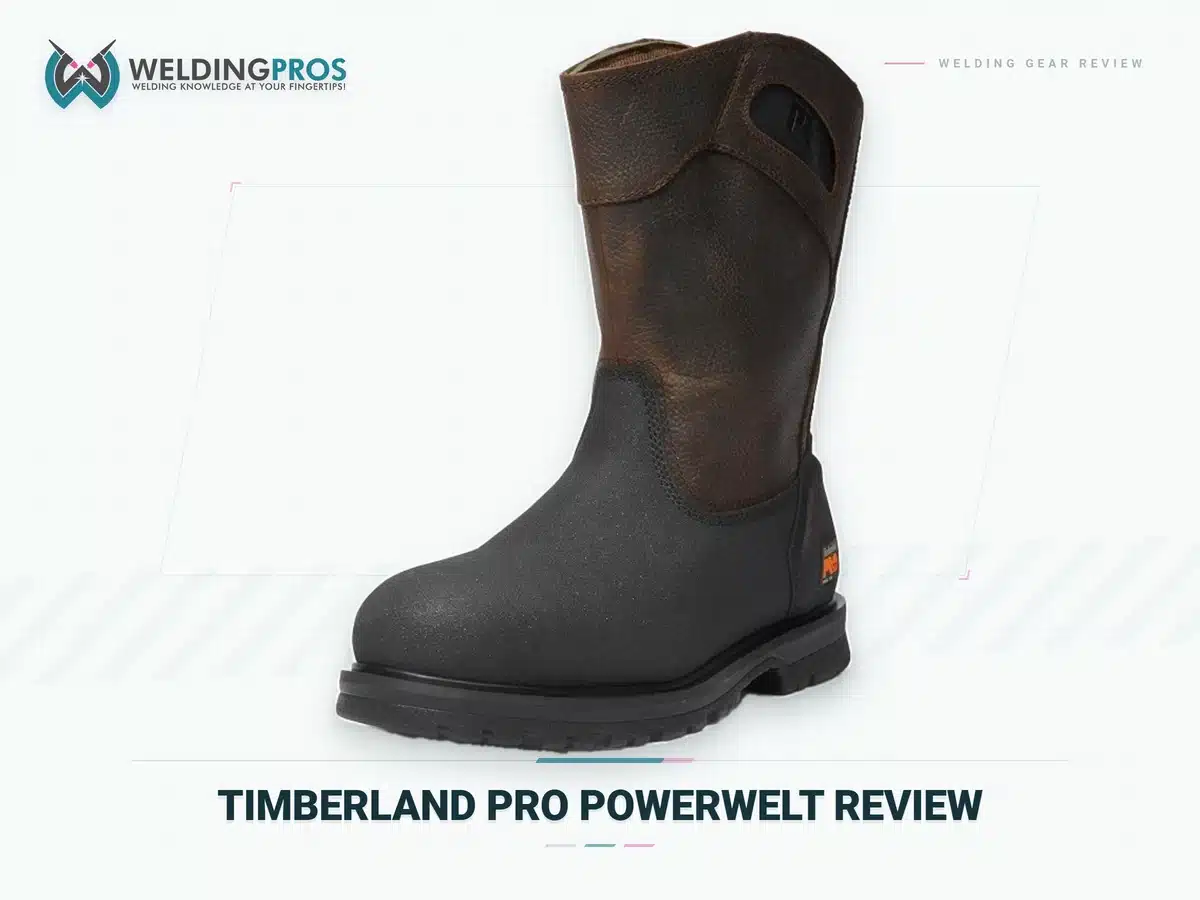
A steel safety toe certified to ASTM F2413-18, electrical hazard protection, a steel shank, and Ever-Guard leather that the brand rates as ten times stronger than regular leather. It sells for $202.90 on Amazon and holds a 4.3-star average across more than 1,500 ratings.
I spent a while digging through what this boot actually offers, and this Timberland PRO Powerwelt review sums it up.
Timberland PRO Powerwelt Package Content & Technical Specifications
The box is as basic as it gets: one pair of boots, nothing else. No laces to burn through, no accessories to lose. Timberland keeps the Powerwelt focused on the boot itself, and the package contains:
Pull-On Steel Toe Wellington With EH Rating And Ever-Guard Leather

- Pair of Timberland PRO Powerwelt boots (Rancher Brown, style TB153522210)
- Grip pull-on loops stitched into the shaft opening
- Mesh lining and polyurethane insole fitted from factory
- No accessories included; boots only
- User Manual
- Shoulder Strap
- Brush
Technical Specifications
| Brand: | Timberland PRO |
| Model: | Powerwelt Pull-on Steel Safety Toe (TB153522210) |
| Color: | Rancher Brown |
| Upper: | Ever-Guard full-grain leather, abrasion-resistant and heat resistant |
| Safety toe: | Steel, ASTM F2412-18a / F2413-18 (impact and compression) |
| Electrical hazard: | ASTM F2412-18a / F2413-18 / F2892-18 EH rated |
| Shank: | Steel |
| Outsole: | Polyurethane, slip / oil / abrasion resistant |
| Insole: | Polyurethane with Anti-Fatigue technology |
| Lining: | Mesh |
| Closure: | Pull-on with grip pulls |
| Shaft: | Calf-high, 9.75 in. circumference |
| Weight: | 1.7 lb per boot (as listed) |
| Rating: | 4.3 out of 5 stars (1,500+ Amazon ratings) |
| Price: | $202.90 (Amazon) |
Pros
- Pull-on Wellington with grip loops; no laces to catch sparks or trap grinding dust
- Steel toe certified to ASTM F2412-18a / F2413-18 for impact and compression
- Electrical hazard protection to ASTM F2892-18 for live circuits in dry conditions
- Ever-Guard leather rated ten times stronger than regular leather and heat resistant
- Anti-Fatigue footbed plus cushioning polyurethane outsole for long shifts
- Steel shank for stability on ladders and grating
- Slip, oil, and abrasion resistant outsole for oily shop floors
- 4.3-star average across more than 1,500 Amazon ratings
Cons
- Water resistant, not waterproof; no membrane for standing water
- No metatarsal guard for heavy fabrication work
- Steel toe and steel shank add weight versus composite options
- $202.90 sits above cheaper pull-on competitors
- Mesh lining offers little warmth in cold outdoor yards
How the Timberland PRO Powerwelt Holds Up at Work
Timberland PRO sells this boot as farm and ranch footwear, but the safety package is pure industrial: steel toe, EH rating, steel shank, and a slip-resistant sole. That mix is why it made my list of the best welding boots for spark-heavy work, and why ranch owners and welders buy the same model.
Specs only tell half the story with footwear, so the rest of this review is about how the Powerwelt actually behaves in a welding shop: how it goes on, what it protects against, and how it feels at the end of a full shift.
Fit and comfort through a full shift
The Powerwelt is a Wellington, so there are no laces at all. You get two grip pulls at the opening, one on each side, and Timberland designed them to make entry easier on a boot with a calf-high shaft. The listed shaft circumference is 9.75 inches, which is the number that decides how the pull-on works on your calf, so measure carefully before you order.
Inside, the boot runs a mesh lining over a polyurethane insole, and under the foot sits Timberland’s Anti-Fatigue technology. Their description calls it a geometric, shock-absorbing comfort system that returns energy to the foot for all-day support. That is marketing copy, but the geometry is the same one the company uses across its industrial line, and a 4.3-star average from over 1,500 buyers says most feet are happy at the end of a full day of wear. Any leather boot this stiff at the shaft eventually softens over the first month of daily wear, and the mesh lining keeps that break-in period from rubbing.

Steel toe, EH rating, and the shank

The protection package is where this work boot justifies its price. The asymmetrical steel toe cap, not a plastic or composite shell, meets ASTM F2412-18a and ASTM F2413-18 impact and compression standards, so dropping stock on your foot is the scenario it is built for. The toe box feels roomier than a soft-toe boot for the same reason. On top of that, the boot carries electrical hazard protection to ASTM F2892-18, which gives you secondary underfoot protection around live circuits and energized equipment. For anyone working around machines, panels, or welding gear in poor grounding conditions, that is the rating that matters.
A steel shank runs through the midfoot. It protects the arch from below and keeps the boot structurally stable, which also helps when you are climbing ladders or standing on grating all day at the job site. What you do not get is a metatarsal guard. If your shop involves heavy fabrication with tools falling from height, the Timberland PRO Met Guard 8 covers the top of the foot and is the safer buy, and you can compare both on the best welding boots page.
Ever-Guard leather, the outsole, and weather
The upper is Ever-Guard leather, a tough, thick, abrasion-resistant hide that Timberland describes as heat resistant and ten times stronger than regular leather. For welding, that combination matters. Sparks and grinding slag that would melt a synthetic upper or chew through cheap leather glance off a dense full-grain hide instead, and there are no laces to catch embers or trap dust. The overall build is simple Wellington construction, and simplicity is exactly what you want when the boot gets scuffed across steel every day.
Underneath, the sole is polyurethane rather than rubber, and the outsole is rated for slip, oil, and abrasion resistance, which gives solid traction on oily shop floors. Polyurethane is lighter than rubber and cushions well, which pairs with the Anti-Fatigue footbed. One honest caveat: the Powerwelt is listed as water resistant, not waterproof. Ever-Guard leather will shed a drizzle and damp grass, but this is not the work boot for standing water or flooded floors. If wet feet are a regular problem on your sites, a waterproof-lined boot is the better route, and boots are only one piece of the puzzle: the rest of the welding safety equipment checklist matters just as much when sparks are flying.

Frequently Asked Questions [F.A.Q]
Is the Timberland PRO Powerwelt waterproof?
No. The official spec lists this pull-on as water resistant, which means light rain and splashes are fine but standing water is not. There is no waterproof membrane in this boot. If you need one, Timberland’s own Powerwelt 6, the 6-inch lace-up version of this line, is the waterproof model. Welders working outdoors in wet conditions should pick that or another waterproof work boot instead.
Is the Powerwelt a good work boot for welding?
Yes, for most shop and field welding it checks the important boxes: full leather upper that resists sparks, steel toe to ASTM F2413-18, electrical hazard protection, and a slip-resistant sole for oily floors. It does not have a metatarsal guard, so heavy fabrication work with falling objects calls for a different boot. I would use these for general fabrication, maintenance work, and farm welding rather than heavy structural work.
Do Timberland PRO boots run big or small?
There is no universal answer, but two practical points help. The asymmetrical steel cap makes the toe box feel roomier than a soft-toe shoe, so the boot feels bigger up front even in your normal size. And since a pull-on has no laces to fine-tune the fit, the 9.75-inch shaft circumference matters more than it would on a lace-up. Order your regular size, try it with the work socks you actually wear, and if the heel slips, going half a size down is the usual fix.
What is the difference between Timberland and Timberland PRO?
Timberland PRO is the work-focused line of the Timberland brand, built around safety toes, electrical hazard ratings, and job-site durability. The classic yellow Timberlands you see as street fashion have none of those certifications. If a boot carries an ASTM rating, it is from the PRO line, and that is the only line a welder should be shopping in.
Conclusion
The Timberland PRO Powerwelt is an easy boot to recommend for welders who want lace-free convenience without giving up real protection. The steel toe and EH ratings cover the shop floor basics, Ever-Guard leather handles sparks and abrasion the way a welding boot should, and the Anti-Fatigue system plus polyurethane outsole keep long shifts bearable. The trade-offs are clear: no met guard, no waterproof membrane, and a $202.90 price that sits in the middle of the pull-on field. For most welding, fabrication, and farm work, it is one of our favorite work boots in the Wellington category, and the 4.3-star rating from more than 1,500 buyers backs that up. Try your normal size first, give the shaft a month to settle, and you will understand why so many owners come back for a second pair of boots, then a new pair the season after, instead of switching brands. See how it stacks up against the other picks on the best welding boots list.






