
I have burned through enough cheap 7-inch grinders to know what a jobsite does to them, so when a Hilti lands on the bench I pay attention. This Hilti AG 700-14D review covers the tool that anchors the top spot in our best large corded angle grinders guide: a 15-amp, 8,500 rpm workhorse built for weld grinding and metal cutting on structural work.
The short version: a dead man’s switch, an 11.5-pound body, an electronic soft start, and a 20-year warranty against defects, at $279 on Hilti’s US store
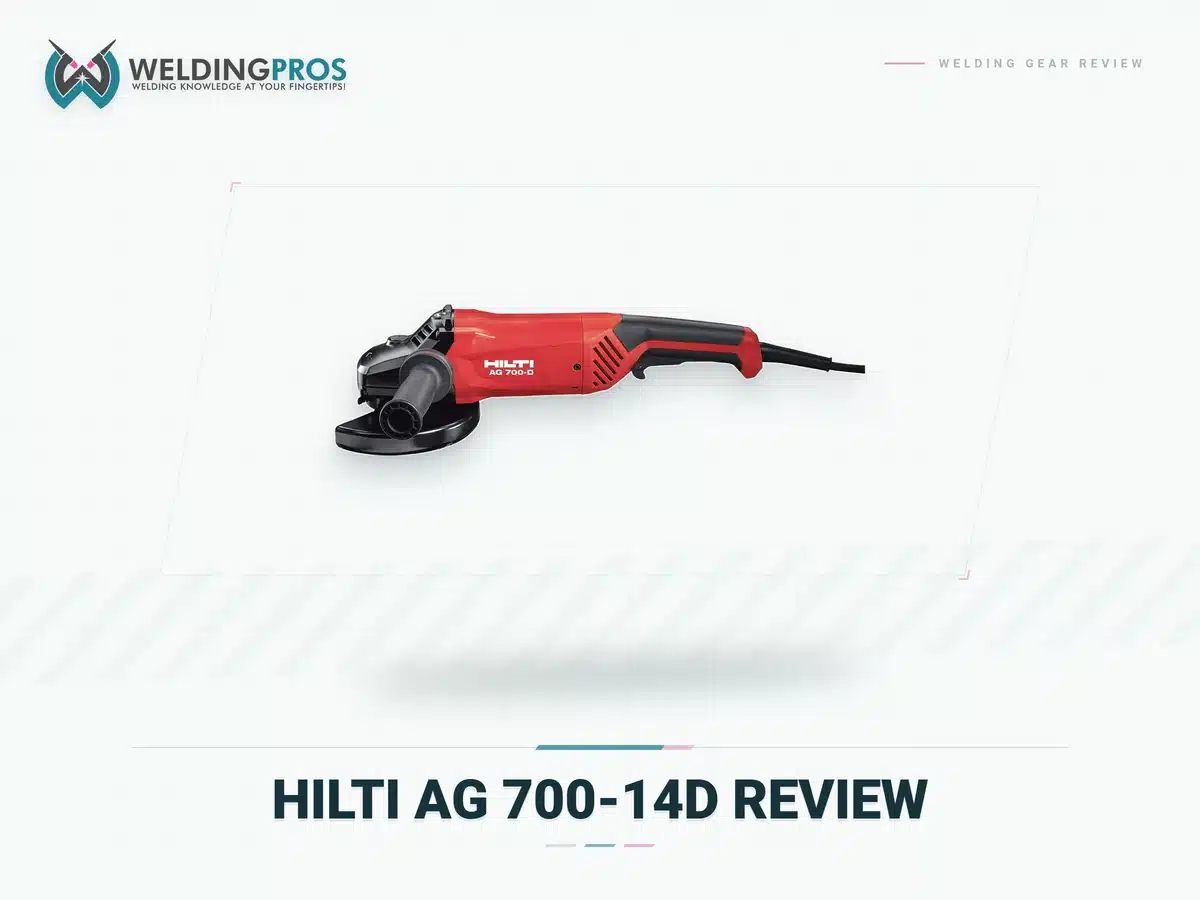
It gives up variable speed and nothing else that matters, and it asks for a real 15-amp circuit in exchange. Now the long version.
In this Hilti AG 700-14D review I will cover the package, the specs from the official operating manual, how it handles real fabrication work, and who should skip it.
Hilti AG 700-14D Package Content & Technical Specifications
Hilti ships the AG 700-14D under SKU 2075615 as a bare tool kit: grinder, guard, side handle, flange and nut, pin wrench, and instructions. No discs in the box, which is standard for Hilti large grinders, so budget for a pack of 7-inch wheels rated for at least 8,500 rpm and 80 m/s. The package includes:
15-Amp Dead-Man Switch 7-Inch Angle Grinder

- AG 700-14D 120V angle grinder
- Basic LAG Comfort three-position side handle
- M14 / 5/8″ installation wrench (pin wrench)
- Ø180 protective cover, Type 27 (180 mm / 7″)
- Ø 45 / 5/8″ clamping flange
- Clamping nut
- Multi-language operating instructions
Technical Specifications
| Disc Diameter: | 7 in (178 mm) |
| Rated Input: | 15 A / 1,400 W, 120 V, 60 Hz |
| Rated Speed: | 8,500 rpm (single speed) |
| Variable Speed: | No |
| Switch Type: | Paddle with dead man’s function |
| Weight: | 11.5 lb (5.2 kg), EPTA 01/2003 |
| Spindle Thread: | 5/8″-11, 2 3/4″ thread length |
| Max Cutting Depth: | 1.65 in (42 mm) |
| Starting Current: | Electronic limiter (soft start) |
| Usage: | Dry cutting and grinding, metal and mineral materials |
| Wheel Rating Required: | ≥ 8,500 rpm and 80 m/s |
| Warranty: | 20 years, defects in parts and manufacturing |
Pros
- Dead man’s paddle switch cuts power the instant you let go
- 15 amps and 8,500 rpm rated speed for a 7-inch disc
- Electronic starting current limiter for smooth, breaker-friendly starts
- Basic LAG Comfort three-position side handle
- Spindle lock for fast one-wrench disc changes
- Rated for metal and mineral materials, dry cutting and grinding
- 20-year warranty against defects in parts and manufacturing
- 11.5 lb EPTA weight with mass over the gear head for control
- Standard 5/8-11 spindle thread compatible with ordinary 7-inch accessories
- Hilti tool service network included
Cons
- No variable speed, single rated speed only
- Dry use only, no water feed
- No active torque control (ATC) on this model
- No discs included in the box
- 15-amp draw needs a real circuit and a generator at 2x rated input
How the Hilti AG 700-14D Handles Real Fabrication Work
The North American 120-volt version carries a 15-amp rating with a rated input of 1,400 watts, and the manual lists the rated speed at 8,500 rpm. That number looks low next to a 4-1/2 inch grinder spinning 11,000 rpm until you remember the disc is half again the diameter. At 7 inches, 8,500 rpm puts the rim right at its rated 80 m/s peripheral speed, which is where a bonded abrasive wants to live in grinding applications.
After a brief overview of the package content and technical specifications, let’s get to the central part of our review. Looking at specifications can be enough for some seasoned welders to tell if they are on the right track or if the machine suitable for them. However, you shouldn’t take words on paper for granted, so we will find out if things are the same in practice. Shortly said, yes, this is a good welder, but let’s look at each aspect.
Power delivery and the soft start
The electronic starting current limiter is the detail I appreciate most. Instead of the lights dimming and the jerk of a hard inrush, the AG 700-14D ramps up and gets to speed without tripping breakers, which keeps it predictable across cutting and grinding applications. On a shared jobsite circuit, that matters more than most spec-sheet lines, and it protects the gears from the shock of a hard start too.
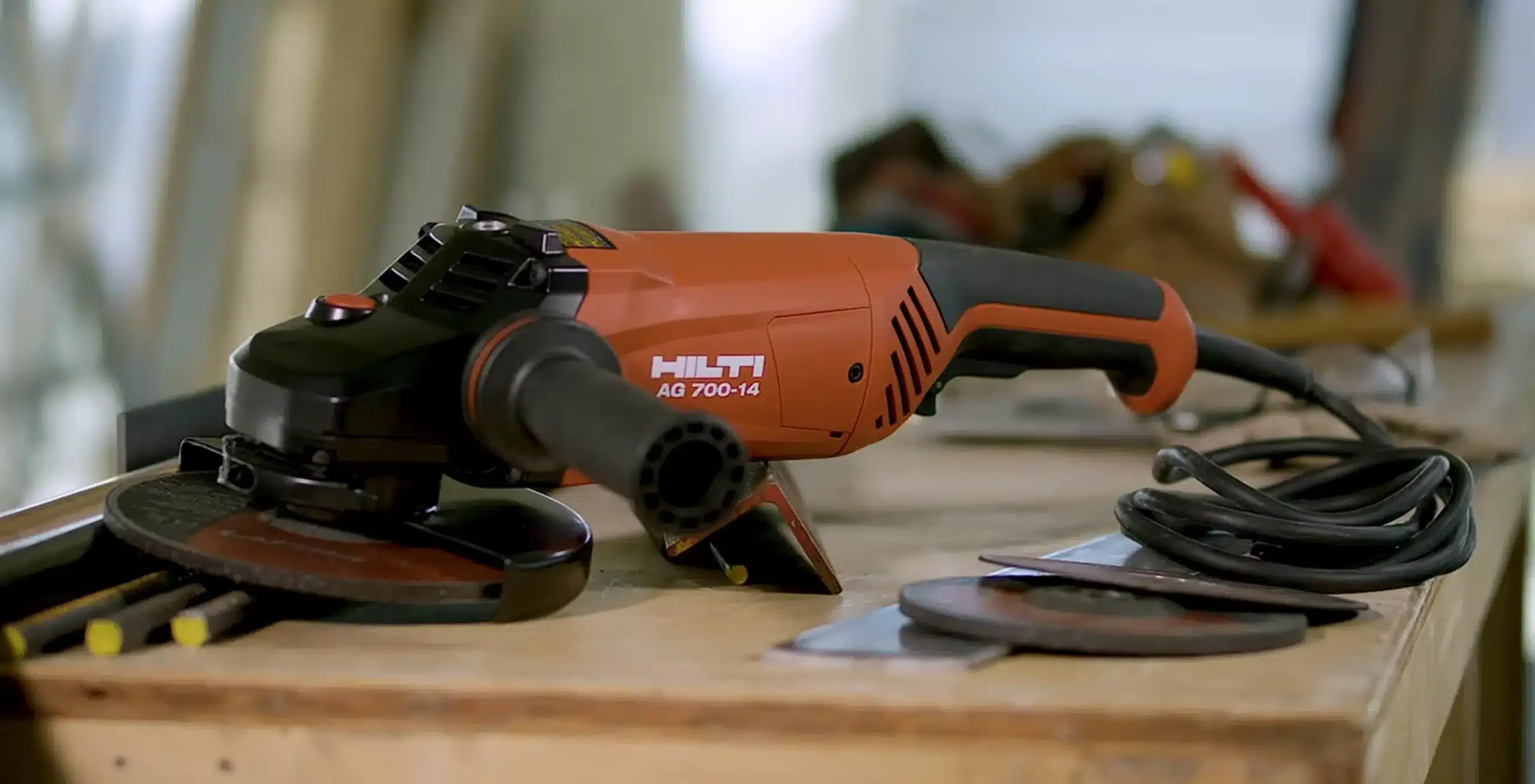
Weld grinding and metal preparation are what Hilti lists as the applications for this tool, and the 1.65-inch maximum cutting depth backs that up for structural sections. The name decodes simply: AG for angle grinder, 700 for the 7-inch class, 14 for the 1,400-watt input rating, D for the dead man’s switch. If you run it from a generator, keep the operating voltage within plus 5 and minus 15 percent of rated, or the tool will bog under load.
The dead-man switch and safety design
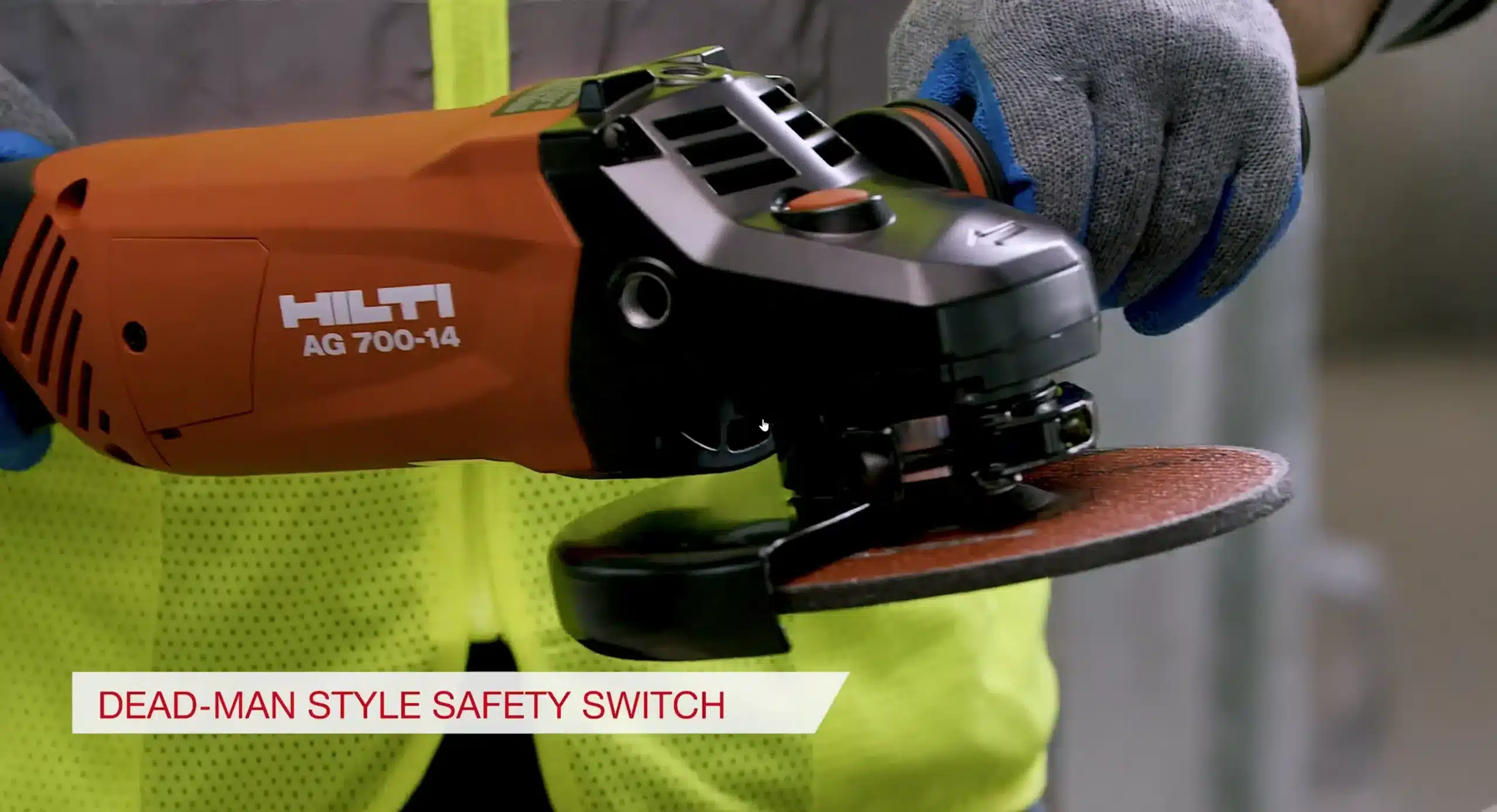
The D in the name is Hilti’s dead man’s switch designation, and the multi-finger paddle is the reason a lot of pros pick this model over the slide-switch competition. Let go of the paddle and the wheel stops getting power. If the tool gets away from you, a kickback pins your grip open, or you drop it off a scaffold, the motor cuts out instead of grinding its way across the deck or your boot, which cuts down on unintended operation.
One honest note: this model does not ship with active torque control (ATC), so the paddle is the safety headline, not an anti-kickback clutch.
The three-position Basic LAG Comfort side handle gives you a secure, comfortable grip set forward, vertical, or back for cutting, surface grinding, or overhead work. One guard rule from the manual: for cut-off work with abrasive discs you must fit the guard with cover plate, every disc must be rated for at least 8,500 rpm, and the nut has to be snug before you pull the trigger.
Hilti’s own disclaimer in the tech data says to use the specific guard depending on the selected disc. For the full run-down on guards, PPE, and positioning, our grinding safety precautions article covers the rest.
Weight, build quality, and daily abuse
At 11.5 pounds by the EPTA procedure, this is not a one-handed tool, and it is not meant to be. The weight sits over the gear head, which helps the disc hold a line when you lean into a bevel or a weld seam, and the ergonomics are about control, not one-hand convenience.
The spindle lock makes disc changes easy: lock it, spin the nut off by hand or with the pin wrench, and you are back to work. The standard 5/8″-11 spindle is compatible with ordinary 7-inch cutting and grinding discs, which adds versatility for a single-speed tool.
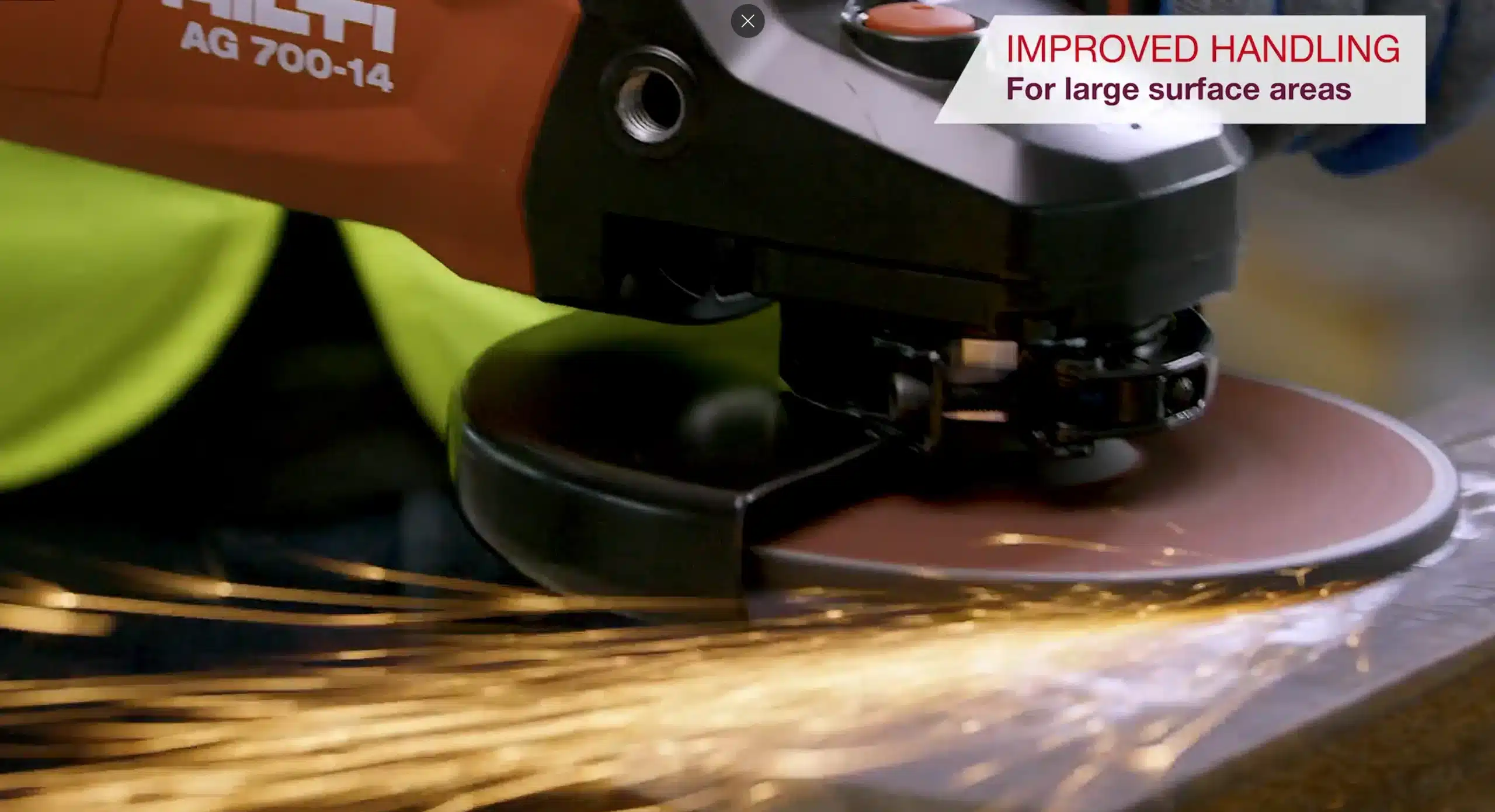
Build quality is the reason people pay Hilti money. The housing is meant to be dropped off a scissor lift a few times a decade and keep working through harsh jobsite conditions, and the manual rates the tool for metal and mineral materials, so with the right diamond discs it turns its hand to masonry and concrete work too.
Two honest limits remain: it is rated for dry cutting and grinding only, no water feed, and the 20-year warranty covers defects in parts and manufacturing, not consumables or the abuse you supply yourself. Amazon feedback on this listing is thin so far, though the Hilti AG 700-14D does carry a 5.0 star rating there.
Frequently Asked Questions [F.A.Q]
Is the Hilti AG 700-14D variable speed?
No. It has a single rated speed of 8,500 rpm and no electronic speed control. If you need variable speed for work like polishing or heat-sensitive steels, look at a variable-speed large angle grinder instead.
What size and type of discs does it take?
It takes discs up to 7 inches (178 mm) on the 5/8″-11 spindle for cutting and grinding work, and every disc must be rated for at least 8,500 rpm and 80 m/s. Maximum thickness by type: 1/10 inch for abrasive cut-off discs, 1/8 inch for diamond cut-off discs, and 1/4 inch for abrasive grinding discs. Maximum cutting depth comes in at about 1.65 inches.
Can I run it on a generator?
Yes, but the generator or transformer must supply at least twice the grinder’s rated input power, and the operating voltage needs to stay within plus 5 percent and minus 15 percent of rated voltage. Undersized generators will bog the angle grinder down under load.
What does the Hilti warranty actually cover?
Hilti’s Tool Service covers defects in parts and manufacturing for 20 years. Prices vary by region, including Hawaii, Alaska, and the US territories. It does not cover normal wear parts, consumables, or damage from misuse. Register the tool and keep your invoice.
Conclusion
The AG 700-14D is the tool I point construction professionals and heavy fabrication users toward when they ask what to buy once. It gives up variable speed and nothing else that matters. The 15 amps, the dead-man paddle, the soft start, the 11.5 pounds hung on a build that shrugs off jobsite life, and two decades of defect coverage add up to an angle grinder you buy once and rebuild rarely. Hobbyists who cut a few rods a month do not need it. If you grind welds for a living and want the machine that anchors our best large corded angle grinders list at the top of the page, this is that machine, and the long-term service network backs it up. Check it on Amazon while you are deciding, and read our full large grinder comparison if you want to see how it stacks against the Bosch and Makita angle grinders.





