
The Eastwood company has been part of the DIY and automotive community since 1978. Their motto is “Do the job right,” but to do it, you will need the right tools.
Today, they produce more than 4000 unique products. However, Eastwood welders really stand out from the crowd.
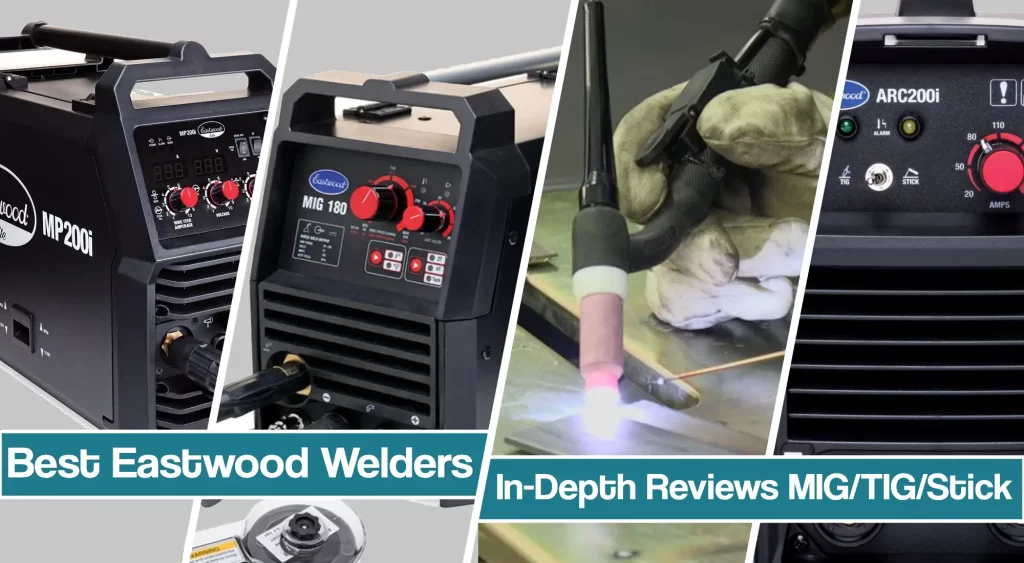
This article will discuss some of the best Eastwood welders, their specifications, features, the good, and the bad. By the end, you should tell if they are your cup of tea but trust me, you will be pleasantly surprised
Best Eastwood Welders – Comparison Table
| Image | Name | Voltage | Current | Amperage | Duty Cycle | Process | Check Price |
|---|---|---|---|---|---|---|---|

| Eastwood 180 Amp MIG Welder | 110/220V | DC | 30-180A | 30% @ 180A | MIG/Flux Core | Check Price |

| Eastwood MP250i Elite | 110/220V | DC | 30-250A | 60% @ 250A | MIG/TIG/Stick | Check Price |

| Eastwood Elite MP200i AC/DC | 110/220V | AC/DC | 30-200A | 20% @ 200A | MIG/TIG/Stick | Check Price |

| Eastwood TIG 220 AC/DC | 110/220V | AC/DC | 10-220A | 60% @ 220A | TIG/Stick | Check Price |

| Eastwood Elite MP140i | 120V | DC | 30-140A | 30% @ 140A | MIG/TIG/Stick | Check Price |
Best Eastwood Welder – Reviews
All Eastwood welders offer great value for the money spent, but we listed the machines that stand out as the best in their category. Therefore, we’ll talk about the best MIG, Flux core, STICK, and Multi-process and TIG welders.
1. Eastwood 180 Amp MIG Welder – Best Eastwood MIG Welder
Best Eastwood MIG Welder
Eastwood 180 Amp MIG Welder
Eastwood’s 180 amp MIG welder is their best-selling machine for a reason. At around $550 with the spool gun included, it does what most brand-name welders in the $800 range do — and in a package that weighs less than 26 pounds.
| Welding Process: | MIG, Flux Core | Input Voltage: | 120V / 240V Dual Voltage |
| Amperage Range: | 120V: 30-120A | 240V: 30-180A | Rated Duty Cycle: | 240V: 30% @ 180A, 60% @ 130A |
| Wire Feed Speed: | 120V: 80-280 IPM | 240V: 80-551 IPM | Weldable Materials: | Mild Steel, Stainless Steel, Aluminum (w/ spool gun) |
| Wire Sizes: | .023″–.035″ solid, .030″–.035″ flux core | Max Weld Thickness: | 5/16″ mild steel |
| Weight: | 25.3 lbs |
Dual voltage is the headline here. On 120V you get 30-120 amps, which handles auto body sheet metal and thin tubing without blowing through. Plug it into 240V and the range jumps to 30-180 amps with enough heat for 5/16″ plate. Most hobbyists will live on 120V. When you need more, it’s there.
The spool gun is what separates this from the pack. Most manufacturers — Hobart, Lincoln, Miller — either don’t include one or charge $200+ as an add-on. Eastwood ships it in the box. You can weld aluminum up to 1/4″ right out of the gate, and it’s a genuine spool gun, not a cheesy plastic copy.
The duty cycle at full power tells you this is an inverter machine doing real work. Thirty percent at 180 amps on 240V means you’re not waiting for the thermal overload to reset every five minutes. On 120V, 30% at 90 amps is standard for the class.
Eastwood’s wire drive is all metal, which matters more than it sounds. Plastic drives flex under load and cause erratic feed. This one doesn’t. Wire speed adjustment is infinite — no clicking through presets — so dialing in your settings is fast. The 2T/4T switch is a nice touch for long runs; lock the trigger on and focus on your bead instead of cramping your hand.
The downsides are manageable. Short leads are an Eastwood thing across their lineup — budget for an extension cord for the power side. The 11-pound spool limit means you can’t run the big 33-pound industrial spools, but for a home shop that’s rarely an issue. Most 8″ spools are 10-11 pounds anyway.
Pros
- Dual voltage gives you flexibility — 120V for the garage, 240V when you need real power
- Includes a spool gun for aluminum, which is almost unheard of at this price
- 30% duty cycle at the full 180 amps beats most transformer machines in this class
- 2T/4T and tack weld modes make long beads and sheet metal work easier
- IGBT inverter tech keeps the weight under 26 lbs — easy to move around the shop
- Metal drive system instead of plastic — smoother wire feed than you’d expect
- 3-year warranty with lifetime tech support from Eastwood’s Pennsylvania shop
Cons
- Leads are a bit short — the 8.5 ft torch and 9.5 ft ground clamp can be limiting
- Only fits 11 lb spools, so if you weld a lot you’ll be swapping wire more often
- No knurled drive roller included for flux core — you’ll want to buy one separately
2. Eastwood MP250i Elite – Best Eastwood Multi-Process Welder
Best Eastwood Multi-Process Welder
Eastwood MP250i Elite
The MP250i Elite is Eastwood’s flagship multi-process machine, and it’s built for people who weld for a living — or act like they do. At 250 amps with a 60% duty cycle, this isn’t a weekend toy. It’s a production tool that happens to cost half what a comparable Miller or Lincoln setup would run you.
| Welding Process: | MIG, Flux Core, DC TIG, Stick | Input Voltage: | 120V / 240V Dual Voltage |
| Amperage Range: | MIG: 30-200A | TIG: 20-200A | Stick: 30-170A | Rated Duty Cycle: | 60% @ 250 Amps |
| Max Weld Thickness: | MIG: 1/2″ | TIG: 3/8″ | Stick: 1/2″ | Wire Feed Speed: | 0-500 IPM |
| Wire Sizes: | .023″–.035″ solid, .030″–.035″ flux core | Weldable Materials: | Steel, Stainless, Aluminum (w/ spool gun) |
| Technology: | IGBT Inverter, Square Wave |
What sets the MP250i apart from the MP200i is raw output and duty cycle. Where the 200i gives you 20% at 200 amps, this one gives you 60% at 250. That’s the difference between stopping to let the machine cool and just keeping the bead going. If you’re doing structural welding, trailer work, or running a small fab shop, that number matters.
The independent gas systems are a detail most people miss until they’re switching between MIG and TIG three times a day. Both bottles stay connected. You don’t touch the regulators. Flip the switch and go. It sounds minor — until you’ve done it 50 times and realize it saves you five minutes every switch-over.
MIG performance is where this machine earns its keep. The arc is stable across the range, from 30 amps for thin sheet to 200 amps for 1/2″ plate. Wire feed is smooth and consistent — Eastwood’s metal drive system shows up here too. The synergic settings are actually usable, which isn’t always true on multi-process machines in this price bracket.
The TIG side is DC-only, which is the biggest asterisk on this machine. You can TIG steel and stainless beautifully — the square wave inverter gives you a soft, quiet arc with good puddle control. High frequency start is standard. But you can’t TIG aluminum without the spool gun in MIG mode. If AC TIG for aluminum is a dealbreaker, look at the MP200i AC/DC instead.
Stick welding rounds out the package. You get up to 170 amps on 240V, which runs 1/8″ 7018 rods without breaking a sweat. The arc force adjustment lets you dial in how aggressive or soft the dig is, and the hot start feature helps with stubborn rods. It’s not a dedicated stick machine, but it doesn’t feel like an afterthought either.
Pros
- 60% duty cycle at the full 250 amps — you can run this thing hard all day without it flinching
- Four processes in one box: MIG, flux core, DC TIG, and stick — no need for separate machines
- Dual voltage with independent MIG and TIG gas systems — swap processes without touching your regulators
- Square wave inverter gives you a smooth, stable arc even on 120V input
- Dynamic cooling fan ramps up only when needed, so it’s quiet during light work
- Lifetime tech support and 3-year warranty from Eastwood
Cons
- At $1,700 it’s a serious investment — overkill if you only weld occasionally
- DC TIG only — no AC, so aluminum TIG welding isn’t possible without the spool gun
- No foot pedal included for TIG — you’ll need to buy one for fine amperage control
3. Eastwood Elite MP200i AC/DC – Best Eastwood AC/DC Multi-Process Welder
Best Eastwood AC/DC Multi-Process Welder
Eastwood Elite MP200i AC/DC
The MP200i AC/DC is Eastwood’s answer to the welder who needs to do everything — including TIG welding aluminum — without buying two separate machines. It’s the same platform as the standard MP200i but adds AC output on the TIG side, which opens up aluminum without needing a spool gun.
| Welding Process: | MIG, Flux Core, AC/DC TIG, Stick | Input Voltage: | 120V / 240V Dual Voltage |
| Amperage Range: | MIG: 30-200A | TIG: 20-200A | Stick: 30-170A | Rated Duty Cycle: | 240V: 20% @ 200A |
| TIG Features: | High Frequency Start, Foot Pedal, AC Balance, Pulse | Wire Feed Speed: | 0-500 IPM |
| Wire Sizes: | .023″–.035″ solid, .030″–.035″ flux core | Weldable Materials: | Steel, Stainless, Aluminum (TIG and MIG w/ spool gun) |
| Weight: | Approx. 60 lbs |
The AC TIG performance is genuinely good. High frequency start means no scratching or sticking the tungsten. The foot pedal gives you real-time amperage control — not just on/off — and the AC balance and frequency controls let you dial in the cleaning action versus penetration ratio. For a multi-process machine at this price, that’s unexpected.
On the MIG side, you get 30-200 amps on 240V, which covers everything from 24-gauge sheet metal to 3/8″ plate. The arc characteristics are smooth and predictable. Wire feed is reliable — Eastwood uses the same metal drive assembly across their MIG lineup, and it shows. Synergic mode works well for beginners; manual mode gives experienced welders full control.
The duty cycle is the trade-off for fitting AC/DC TIG into a multi-process chassis. Twenty percent at 200 amps means two minutes of welding followed by eight minutes of cooling at max output. For most home and light fab work that’s fine — you’re rarely running at 200 amps continuously. But if you’re welding thick aluminum plate all day, this isn’t the machine for that.
Stick welding performance is solid. You get 30-170 amps on 240V with hot start and arc force control. 7018 rods run clean, 6010 runs with good penetration. The arc is stable down to about 30 amps, which is fine for thinner material. If stick is your primary process, a dedicated machine would serve you better, but as part of a multi-process setup it’s more than adequate.
The real value here is consolidation. You’re getting a capable MIG welder, a real AC/DC TIG machine with pulse and foot pedal, and a stick welder in one box that runs on either 120V or 240V. Buying those as separate machines from blue or red brands would cost $3,000 or more. Eastwood gives you the same capability for around $1,750.
Pros
- True AC/DC TIG with high frequency start and included foot pedal — welds aluminum without a spool gun
- Pulse TIG with adjustable frequency and balance gives you real control over the puddle
- Four processes in one: MIG, flux core, AC/DC TIG, and stick — the most versatile Eastwood makes
- Dual independent gas ports for MIG and TIG — no swapping hoses between processes
- Rocker-style foot pedal included — not the cheap on/off switch some manufacturers bundle
- Runs on 120V or 240V, so you can start in the garage and grow into a proper 240V setup
- Comes with a gas lens kit for the TIG torch — better gas coverage out of the box
- 3-year warranty and Eastwood’s US-based support team
Cons
- 20% duty cycle at max output means you’ll hit the thermal limit on heavy production work
- At $1,750 it’s competing with dedicated AC/DC TIG machines from Everlast and AHP
- Heavy at around 60 pounds — not something you’ll want to haul around daily
4. Eastwood TIG 220 AC/DC – Best Eastwood TIG Welder
Best Eastwood TIG Welder
Eastwood TIG 220 AC/DC
Eastwood’s TIG 220 AC/DC is the newest addition to their welding lineup and replaces the popular TIG 200. The extra 20 amps might not sound like much, but combined with the upgraded AC waveform controls and a flex-head torch, this machine punches above what its spec sheet suggests.
| Welding Process: | AC/DC TIG, Stick | Input Voltage: | 120V / 240V Dual Voltage |
| TIG Amperage Range: | 240V: 10-220A | 120V: 10-145A | Stick Amperage Range: | 240V: 10-210A | 120V: 10-140A |
| Duty Cycle (TIG): | 240V: 60% @ 220A | 120V: 60% @ 100A | AC Features: | Waveform, Balance, Frequency, Pulse |
| Starting Method: | High Frequency Start | Included Accessories: | WP-17F Flex-Head Torch, Gas Lens Kit, Foot Pedal |
| Weight: | Approx. 40 lbs |
The AC side is where this welder earns its keep. You get independent control over AC balance, frequency, and waveform shape — settings typically found on machines costing twice as much. Dial the balance toward electrode negative for more penetration into thick aluminum, or shift it toward positive for better oxide cleaning on dirty castings.
The included accessories are generous. The WP-17F flex-head torch is a real upgrade over the fixed-head torches bundled with most machines in this class. Being able to bend the head 45 degrees makes a difference when you’re welding inside a frame or around a tube junction.
Stick welding performance is a nice bonus. At 210 amps on 240V, you can run 1/8″ 7018 all day or push 5/32″ rods for heavier structural work. Arc force control lets you dial in how the machine responds when you’re running a tight arc — dig it in for 6010 on pipe, or back it off for smoother 7018 beads on flat plate.
The dual voltage capability means you can start on 120V in a home garage and move to 240V when you have the outlet. On 120V you’re limited to about 145 amps, which handles thin aluminum sheet and smaller steel projects.
The main hesitation is the lack of a track record. With only one review on Amazon as of mid-2026, there’s not enough data to say how these hold up over years of use. Eastwood’s warranty and US-based support help mitigate that risk, but if long-term reliability data matters to you, the older TIG 200 has a proven history.
Pros
- High frequency start means no tungsten contamination — just hold the torch and go
- Included flex-head WP-17F torch and gas lens kit give you professional-quality gas coverage
- Pulse, AC balance, and frequency controls let you fine-tune the arc for any aluminum alloy
- Dual voltage with 60% duty cycle at full output on 240V — runs cool even at max amperage
- Rocker-style foot pedal provides smooth, progressive amperage control through the entire range
- Compact inverter design at around 40 pounds — easy to move between workstations
- 3-year warranty backed by Eastwood’s Pennsylvania-based support team
Cons
- Only 1 review on Amazon — not enough real-world feedback yet to spot long-term reliability issues
- At $800 it’s more expensive than some comparable 200-amp AC/DC machines
- No digital display — settings are adjusted by knob, which takes some getting used to
5. Eastwood Elite MP140i – Best Budget Eastwood Multi-Process Welder
Best Budget Eastwood Multi-Process Welder
Eastwood Elite MP140i
The MP140i is Eastwood’s entry-level multi-process machine, and it’s aimed squarely at the home gamer who wants to try everything — MIG, TIG, and stick — without rewiring the garage or spending $1,000. For around $400, you get four welding processes in a package that weighs about as much as a bag of dog food.
| Welding Process: | MIG, Flux Core, DC TIG, Stick | Input Voltage: | 120V |
| Amperage Range: | 30-140A | Rated Duty Cycle: | 30% @ 140A |
| TIG Features: | High Frequency Start, Foot Pedal Compatible | Wire Feed: | Smart Wire Feed with Synergic LCD Display |
| Wire Sizes: | .023″–.035″ solid, .030″–.035″ flux core | Spool Sizes: | 4″ and 8″ spools |
| Weight: | Approx. 25 lbs |
The standout feature is the high frequency DC TIG start. Most machines in this price range use scratch-start or lift-start TIG, which means you’re dragging the tungsten across the workpiece and hoping you don’t contaminate it. Eastwood included a real HF start circuit here. Hold the torch, press the pedal or button, and the arc lights clean.
MIG performance on 120V is what you’d expect from a 140-amp machine — good for auto body, furniture, and light fabrication up to about 3/16″. The synergic LCD display simplifies setup: tell it what wire and gas you’re using, and it sets voltage and wire speed automatically. Experienced welders can switch to manual mode and dial in their own settings.
Stick welding rounds out the package. You get up to 140 amps, which runs 3/32″ 6011 and 7018 rods comfortably. 1/8″ 7018 will run but it’s pushing the machine’s limit — expect to stop and let it cool more often on hotter rods. For farm repairs, gate hinges, and bracket work, it’s more than capable.
The 120V-only limitation is the biggest trade-off. You can’t plug this into a dryer outlet and get more power. What you see is what you get — 140 amps max. For most home projects that’s enough. But if you think you’ll need to weld 1/4″ plate or thicker with any regularity, step up to the MP200i or MP250i instead.
Compared to the competition — the Lincoln 140 MP or the Hobart Handler 140 with a separate TIG setup — the MP140i holds its own. Lincoln’s 140 MP costs more and only does MIG and stick. Hobart’s Handler 140 is MIG-only unless you buy a spool gun and TIG add-ons.
Pros
- Runs on a standard 120V household outlet — no special wiring or 240V circuit needed
- High frequency DC TIG start at this price point is rare — no scratch-start compromise
- Synergic LCD display makes setup dead simple for beginners learning multiple processes
- Smart Wire Feed technology gives smoother arc starts and less spatter than basic wire drives
- Weighs about 25 pounds — grab it with one hand and take it anywhere
- Optional spool gun and TIG foot pedal expand capability without buying a separate machine
- Four processes in a compact package: MIG, flux core, DC TIG, and stick
- 3-year warranty with Eastwood’s lifetime tech support
Cons
- 120V only — no 240V option, so you’re capped at 140 amps regardless of what’s available
- DC TIG only means no aluminum TIG welding (though the spool gun handles aluminum in MIG mode)
About Eastwood Company
The automotive refurbishing market began to take off in the 1970s, and that’s when Curt Strohacker realized enthusiasts would need the right tools to do it right. So in the fall of 1978, Curt launched a business called Eastwood.
Since its inception, the Eastwood brand has recognized that change constantly takes place in the marketplace. As a result, Eastwood has seen increased requests for products geared towards muscle cars, street rods, trucks, and motorcycles.
So today, Eastwood continues to prove its dedication to offering unique solutions to the challenges facing restoration and customization enthusiasts.
What Do Eastwood Welders Have In Common?
While reading customer experiences and writhing these Eastwood welder reviews, we noticed some things that all Eastwood models have in common. Similarities refer to build quality, capability, market orientation, features, and much more.
Build Quality
The first look at any Eastwood welder leaves an impression of a sturdy machine built to last and perform. For example, many cheap overseas welders seem like they will fall apart.
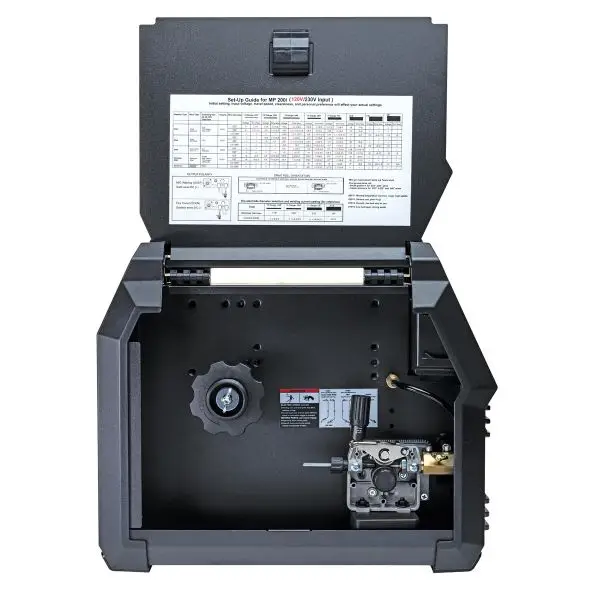
State-of-the-art internal components follow the visual quality. For instance, Eastwood produces MIG welders that feature a complete metal wire drive wire feeding mechanism. Older models like Eastwood MIG 135 welder or Eastwood 175 included plastic feeders that tend to lose reliability after frequent use.
Luckily, Eastwood is known for its tendency to acknowledge customer needs. That’s why the latest models are significantly improved.
Accessories and Consumables
Besides the high build quality, Eastwood also provides decent accessories. MIG gun, TIG torches, and Stick electrode holders are comfortable, durable, and well built. Even though some brand-name companies such as Hobart, Miller, or Lincoln provide high-end torches, Eastwood accessories use Tweco style consumables.
That means you don’t have to buy expensive consumables tailored to fit unique accessories. Instead, you can find them in any local welding shop or even after-hours markets.
On the other hand, many disliked the length of the leads. Torches usually offer ten ft. leads, while power chords are approximately 6″ long. Other manufacturers such as Forney feature 10-15″ long leaders, allowing you more flexibility in the workshop.
Welding Capabilities
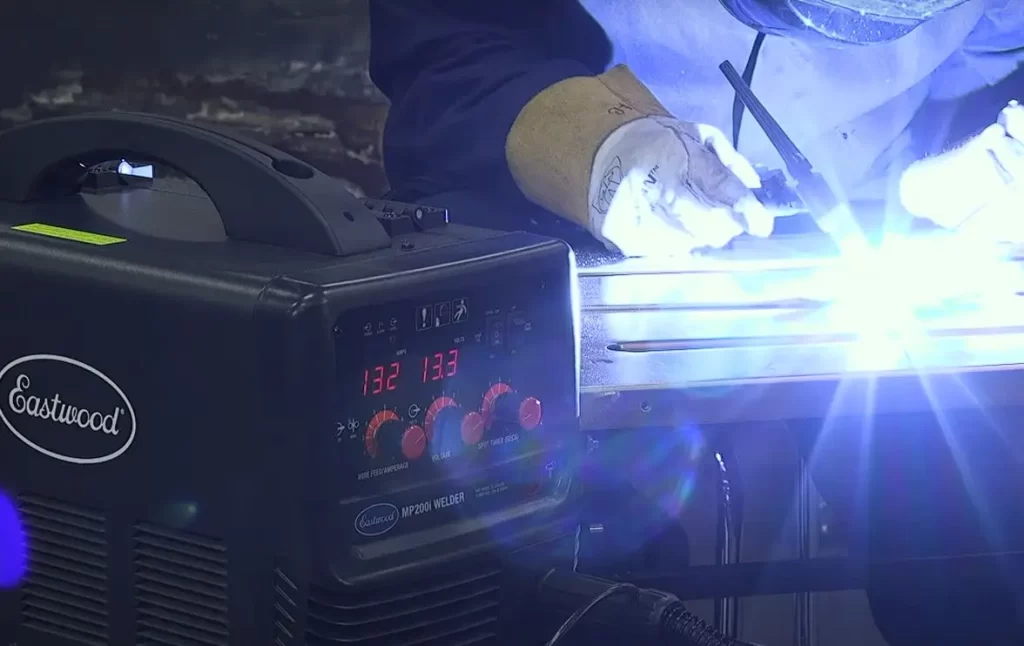
All Eastwood welders provide excellent and well-tested welding capability. While some manufacturers claim their machines can do much more, Eastwood clearly states the upper and lower welding power. That’s why you can suit your needs according to the given specifications.
In addition, IGBT inverters provide a higher duty cycle, which affects your productivity. So, we can say Eastwood welders are capable and efficient.
Who Are Eastwood Welders Designed For?
Eastwood’s welders were mainly designed for automotive DIY project enthusiasts, but they found their way to an evergrowing hobbyist industry. The company set its goals straight, leading to great success.
That’s why today, Eastwood welders are not accounted as high-end professional machines, but you will undoubtedly feel like a pro once you start using them. So what’s the best part about it?
First, you don’t have to spend a fortune on features you are most likely not to use anyways. However, professional welders are looking to use advanced features,so you might have to look further.
Don’t get me wrong; you won’t be disappointed by any Eastwood welder, but you shouldn’t expect the same performance high-end Miller or Lincoln units offer.






